Where to place a gas cylinder at home: the right spots and the places to avoid
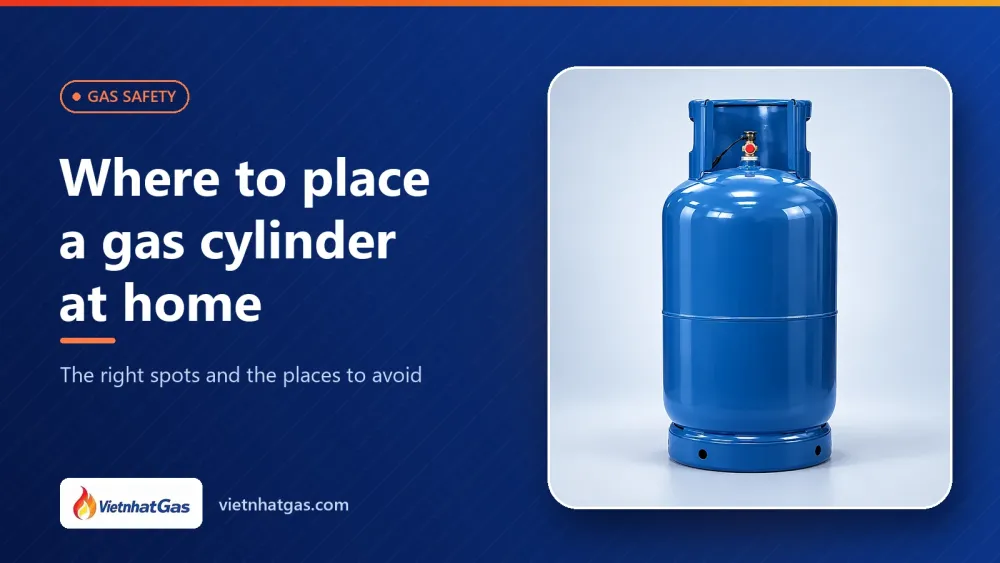
Where to place a gas cylinder at home safely: a well-ventilated spot, upright, away from heat and electrical appliances, avoiding enclosed low-lying spaces because gas is heavier than air, with notes on kitchen cabinets and flats.
VietnhatGas · · 4 min read
Where you put the gas cylinder in the kitchen may seem a minor detail, but it directly affects the safety of the whole family. Choosing where to place a gas cylinder correctly means that any leaking gas escapes quickly instead of building up, while keeping the cylinder well away from sources of ignition. Below are the basic principles for houses, flats and small shops.
Understand how gas behaves before choosing a spot
The LPG used in homes is heavier than air. When it leaks, the gas does not rise but sinks, spreading along the floor and collecting in low-lying, enclosed spaces. So the place where you keep the cylinder must be ventilated at the bottom, not just at the top. Find out more in what is LPG.
Principles for choosing where to place a gas cylinder
Well ventilated: with a window, a vent or a ventilation gap close to the floor so that leaking gas can escape outside.
Upright on a flat, solid surface: do not lay it down, prop it at an angle or stand it on a high shelf where it could fall.
Away from heat: do not put it right next to a stove in use, an oven, a charcoal stove or anywhere in direct sunlight for long periods.
Away from sockets, switches and electrical appliances: the spark when something is switched on or off can cause a fire if gas is leaking.
Easy to reach: so you can close the valve quickly when needed and easily check the valve and hose.
The distance between the cylinder and the stove should follow the stove manufacturer’s instructions; the hose should be just long enough, not stretched and not kinked — see when to replace a gas hose.
Places where you should not put a gas cylinder
Basements, pits, drains and low-lying spots: gas is heavier than air and will collect there.
Closed cupboards and enclosed spaces under the stairs with no ventilation openings at the bottom.
Bedrooms and bathrooms, or closed rooms that people rarely go into.
Right next to a water heater, fridge, washing machine or electrical socket.
Passageways and escape stairs: a cylinder placed there gets in the way and obstructs escape in an emergency.
Do not store many cylinders in the house; a spare cylinder must also stand upright, with its valve closed, in a well-ventilated place.
Can you keep a gas cylinder in a kitchen cabinet?
Many families keep the cylinder in the cabinet under the hob to save space. This should only be done if the cabinet has ventilation holes or gaps, especially near the floor, so that leaking gas is not trapped inside. The cabinet needs to be large enough for the cylinder to stand upright and be taken out easily, and must not contain flammable items such as paper, cloths or cooking oil. Open the cabinet and check it often, because a leak in an enclosed space is harder to notice.
Notes for flats and apartment buildings
Many apartment buildings have their own rules: some restrict or prohibit the use of gas cylinders in flats, and some use a central gas system. Before using a cylinder, ask the building management and follow the house rules as well as the fire safety regulations in force. If it is allowed, choose a spot near a window or a well-ventilated balcony, sheltered from sun and rain, rather than an enclosed corner.
Shops, eateries and restaurants
Premises that use 45kg cylinders or a cylinder bank for high-flame stoves need a separate cylinder area that is screened, ventilated and connected by fixed pipework, rather than keeping the cylinders right next to the stoves. See the details in installing gas cylinders in restaurants.
If your building uses a central gas system, our article on how piped gas works in apartment buildings explains metered billing, what the building management and residents are each responsible for, and how it differs from using a gas cylinder.
In a small rented room, choosing the right type of stove matters as much as where you put the cylinder; our guide to gas stoves for rented rooms by space, safety and cost helps you weigh up a mini gas stove, a small cylinder and an induction hob.
Frequently asked questions
How far from the stove should a gas cylinder be?
The distance depends on the type of stove and the manufacturer’s instructions. The general principle is that the cylinder should not be exposed to direct heat from the stove, the hose should not be stretched and you should be able to close the valve quickly when needed.
Should I keep the gas cylinder on the balcony?
A well-ventilated balcony is a good choice if the cylinder is sheltered from sun and rain, stands securely and complies with the building’s rules. Avoid leaving the cylinder in strong sunlight for long periods.
Is it harder to detect a leak if the gas cylinder is under a cabinet?
VietnhatGas manufactures 12kg LPG cylinders, 45kg cylinders and cylinder valves for dealers and filling plants. Send a request on our quotation page.
Written by the VietnhatGas technical and sales team — a batch manufacturer of LPG cylinders. This content is for reference; regulations and standards may change, so please check the current texts.
A guide on how to change a gas cylinder at home safely: preparation, closing the valve, removing and fitting the regulator, checking the new cylinder, testing for leaks with soapy water, what not to do and when to call your dealer.
Home gas delivery tips for dealers: committing to time slots, taking orders by phone and Zalo, professional staff, fitting the cylinder and testing for leaks at the customer’s home, safety on the road and handling complaints.
Can a gas cylinder explode in everyday use? The real causes of most gas incidents, the role of the safety valve, common misconceptions and a checklist of what to do to prevent incidents.
Read article →
Need a volume quote?
Send us the capacity, quantity and brand printing requirements — VietnhatGas will reply with a batch quotation.