Can a gas cylinder explode? The truth about the risks and how to prevent incidents
Can a gas cylinder explode in everyday use? The real causes of most gas incidents, the role of the safety valve, common misconceptions and a checklist of what to do to prevent incidents.
VietnhatGas · · Updated · 4 min read
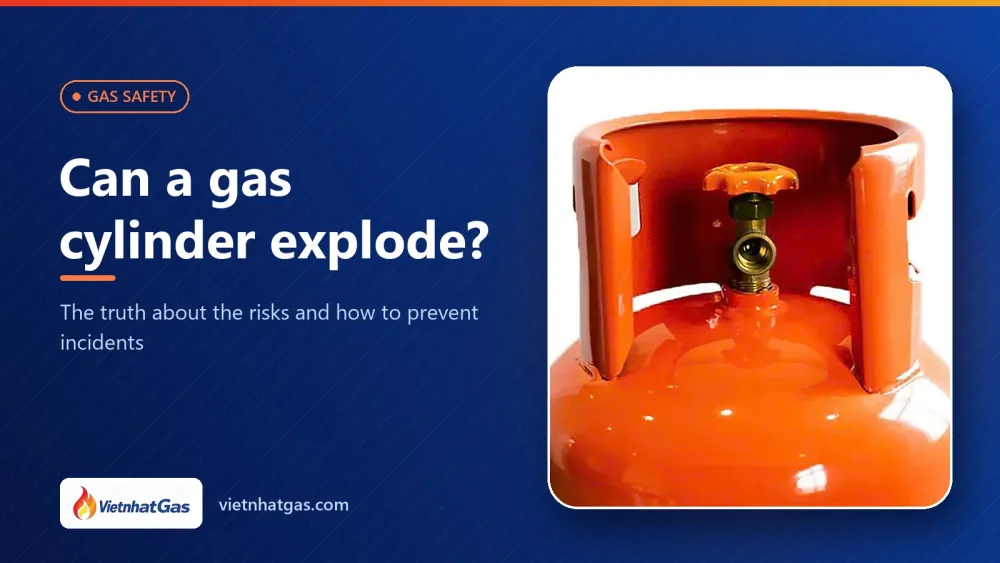
Whenever there is news of a gas fire, many people find themselves asking: can a gas cylinder explode, and is the cylinder in their own kitchen safe? The honest answer is that a compliant gas cylinder that is within its inspection date, and is installed and used correctly, is very unlikely to have an incident by itself. Most gas incidents stem from leaks, high temperatures or cylinders whose quality is not assured.
How is a gas cylinder built to withstand pressure?
Inside the cylinder, LPG is held as a liquid under pressure, with a vapour space above it. The cylinder body is made from special-purpose steel and manufactured to the applicable standard — for VietnhatGas, TCVN 6292:2013, with reference to ISO 22991 — and every cylinder is pressure tested and leak tested before leaving the factory. See also LPG cylinder pressure testing.
The real causes of most gas incidents
Leaked gas building up in an enclosed space
This is the most common cause. Gas leaks from an ageing hose, a loose joint, a faulty regulator or a stove left on by mistake. LPG is heavier than air, so it builds up close to the floor and mixes with the air to form a flammable mixture; a single spark from a light switch or a lighter is enough for it to ignite violently. What makes it dangerous then is the gas that has leaked out, not the cylinder body.
Cylinders exposed to fire or high temperatures
When a cylinder is caught in a fire or sits right next to a strong heat source, the pressure inside rises while the heated steel weakens. So do not place the cylinder next to a stove or oven, in strong sunlight or near flammable materials.
Damaged cylinders, overdue for inspection
A cylinder that is deeply rusted, dented, bulging, scorched or overdue for inspection can no longer be relied on to be as strong as it originally was — see can you use a rusty or dented gas cylinder.
Illegal refilling, unsuitable equipment
Cylinders filled at premises that do not meet the requirements may be overfilled beyond the permitted level, leaving too little vapour space for the liquid gas to expand as it warms up. The wrong type of regulator or hose, or home-made ones, also increase the risk of leaks.
What does the safety valve on a gas cylinder do?
Depending on the design, many types of gas cylinder valve have a safety device (a pressure relief valve) that opens automatically to release some gas vapour when the pressure inside the cylinder rises too high. It is the last line of protection, not a reason to be complacent: the valve only works properly when it is intact, and gas released near a flame can still catch fire.
Myths and facts
A gas cylinder can explode by itself at any moment: not true. The risk comes mainly from leaks and heat.
A cylinder that is nearly empty is no longer dangerous: not true. A nearly empty cylinder still contains gas vapour.
Testing for leaks with a flame is quicker: absolutely not. Only check with soapy water.
Laying the cylinder down saves space: not advisable. The cylinder must always stand upright.
A checklist for preventing incidents
Buy gas from a reputable dealer; the cylinder should be sealed and within its inspection date.
Stand the cylinder upright in a well-ventilated place, away from heat sources.
Use the correct type of regulator and hose; replace them when they age.
Close the cylinder valve before going to bed or going away.
If you smell gas: do not switch electrical equipment on or off, close the valve, open doors for ventilation, leave the area, and call your dealer or 114 from outside.
Doing all of the above significantly reduces the risk of a gas incident in your home.
One preventive step worth taking from the outset is buying gas from a trustworthy source; our article on choosing a reliable gas dealer for your home provides a checklist covering seals, cylinder inspection dates and warning signs to avoid.
Frequently asked questions
Is it dangerous to leave a gas cylinder in the sun?
It is not advisable. Prolonged strong sunlight raises the temperature and pressure inside the cylinder; keep the cylinder in a shaded, well-ventilated place.
How dangerous is a leaking gas cylinder?
Leaked gas builds up and, if it meets a spark, can ignite very violently. If there is already a fire, see the guide on what to do in a gas fire.
How can I tell whether a gas cylinder is still safe to use?
The cylinder is sealed and within its inspection date, its body is not deeply rusted, dented, bulging or scorched, and there is no smell of gas.
VietnhatGas manufactures 12kg LPG cylinders and 45kg cylinders, pressure testing every cylinder and supplying inspection records for each batch, and also supplies the LPG cylinder handwheel valve to dealers and filling plants. Send a request on our quotation page.
Written by the VietnhatGas technical and sales team — a batch manufacturer of LPG cylinders. This content is for reference; regulations and standards may change, so please check the current texts.
Where to place a gas cylinder at home safely: a well-ventilated spot, upright, away from heat and electrical appliances, avoiding enclosed low-lying spaces because gas is heavier than air, with notes on kitchen cabinets and flats.
A guide on how to change a gas cylinder at home safely: preparation, closing the valve, removing and fitting the regulator, checking the new cylinder, testing for leaks with soapy water, what not to do and when to call your dealer.
How to calculate how many cylinders a gas dealer needs: cylinders at customers’ homes, cylinders in circulation, full-cylinder stock and a reserve; a worked example, the 12kg – 45kg mix, allowing for growth and signs of a shortage.
Read article →
Need a volume quote?
Send us the capacity, quantity and brand printing requirements — VietnhatGas will reply with a batch quotation.