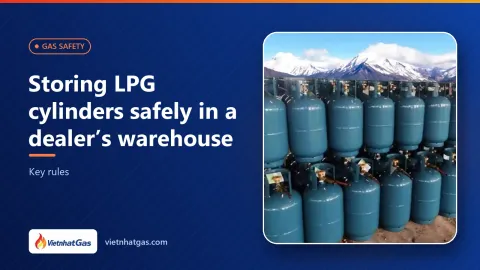
Storing LPG cylinders safely in a dealer’s warehouse: key rules
Rules for storing LPG cylinders at dealers and filling stations: warehouse location, how to stack cylinders, separating full and empty ones, leak checks and fire safety.
Read articleHow to choose a reliable gas dealer for your home or restaurant: a clear address and brand, licences, cylinders still sealed and within their inspection date, weighing on delivery, transparent prices and warning signs to avoid.
The gas cylinder in your kitchen passes through a dealer’s hands: the dealer chooses the supply, delivers the cylinder, fits it and is the one you call when something goes wrong. That is why knowing how to choose a reliable gas dealer matters as much as choosing a good stove. Below is a checklist from the buyer’s point of view — households, eateries and restaurants — to use before committing to a dealer for the long term.
Selling gas is a conditional business line. A retail shop needs a business registration and a certificate of eligibility under current regulations on gas trading. You have the right to ask; a reputable dealer will readily show them. Restaurants signing a long-term gas supply contract should keep copies of these documents.
If the brand uses a QR label or lookup code, try scanning it; details are in LPG cylinder traceability.
A good dealer does not just put the cylinder down and leave: the staff member fits the right type of regulator, leak-tests around the joints with soapy water (never with a flame), test-lights the stove and points out when the hose or regulator is getting old. Compare this with the steps in how to change a gas cylinder at home.
Asking for the cylinder to be weighed on delivery is a buyer’s legitimate right. A reliable dealer weighs it in front of the customer; a dealer who repeatedly claims that the “scale is broken” is a worrying sign. For how to work out the actual gas, see how to check a gas cylinder’s weight.
Gas incidents do not keep office hours; ask whether the dealer has a contact number for evenings and weekends, and keep it near the kitchen. Even so, if you smell gas, the first steps are still: do not switch electrical equipment on or off, close the cylinder valve, open doors for ventilation and leave the area, and only then call the dealer or the fire service on 114 from outside.
When you choose a reliable gas dealer, the following are reason enough to consider looking elsewhere:
Only switch after checking the new dealer against the criteria above; unusually low prices often come with underfilled cylinders or cylinders of unclear origin.
Yes, if it uses gas regularly. The contract should state the brand, how prices are calculated, delivery times, responsibility for safety checks and how underfilled cylinders are handled.
Call the hotline of the brand printed on the cylinder’s label or tag to confirm that the shop is part of its distribution network.
VietnhatGas manufactures LPG cylinders and valves for gas brands, filling plants and dealers. Dealers wanting standard-compliant, easily traceable cylinders can browse our LPG cylinders and valves category or send a request on our quotation page.
Written by the VietnhatGas technical and sales team — a batch manufacturer of LPG cylinders. This content is for reference; regulations and standards may change, so please check the current texts.
Rules for storing LPG cylinders at dealers and filling stations: warehouse location, how to stack cylinders, separating full and empty ones, leak checks and fire safety.
Read articleTransporting gas cylinders safely: choosing the vehicle, keeping cylinders upright and firmly secured, closing the valve, handling with care, dealing with a leak on the road and what to watch when delivering to customers’ homes.
Read articleHow to calculate how many cylinders a gas dealer needs: cylinders at customers’ homes, cylinders in circulation, full-cylinder stock and a reserve; a worked example, the 12kg – 45kg mix, allowing for growth and signs of a shortage.
Read articleSend us the capacity, quantity and brand printing requirements — VietnhatGas will reply with a batch quotation.