Storing LPG cylinders safely in a dealer’s warehouse: key rules
Rules for storing LPG cylinders at dealers and filling stations: warehouse location, how to stack cylinders, separating full and empty ones, leak checks and fire safety.
VietnhatGas · · Updated · 3 min read
The cylinder warehouse is where a dealer keeps the most gas, so the way you store LPG cylinders there determines the safety of the whole shop and the surrounding neighbourhood. Most incidents start with small habits: laying cylinders down, stacking them near heat, ignoring a faint smell of gas. Below are the rules to apply every day.
Understand LPG to store it correctly
LPG (liquefied petroleum gas) is held as a liquid under pressure in the cylinder. When it escapes, it evaporates and is heavier than air, so instead of rising it collects in low places: floors, drains, manholes, basements. Commercial gas contains an odorant so that leaks can be smelled. These two facts explain most of the rules below.
Choosing the warehouse location
Well ventilated: vents at floor level so leaked gas can escape instead of collecting.
No enclosed low points: avoid basements, manholes and closed drains inside the cylinder area.
Away from direct sunlight and heat: high temperatures raise the pressure inside cylinders.
Away from flames and electrical sparks: no sockets, switches, stoves or welding machines in the cylinder area; electrical equipment in the warehouse should be of a suitable safe type.
Clear access: wide enough for trolleys and delivery vehicles, and for evacuation if needed.
How to arrange cylinders
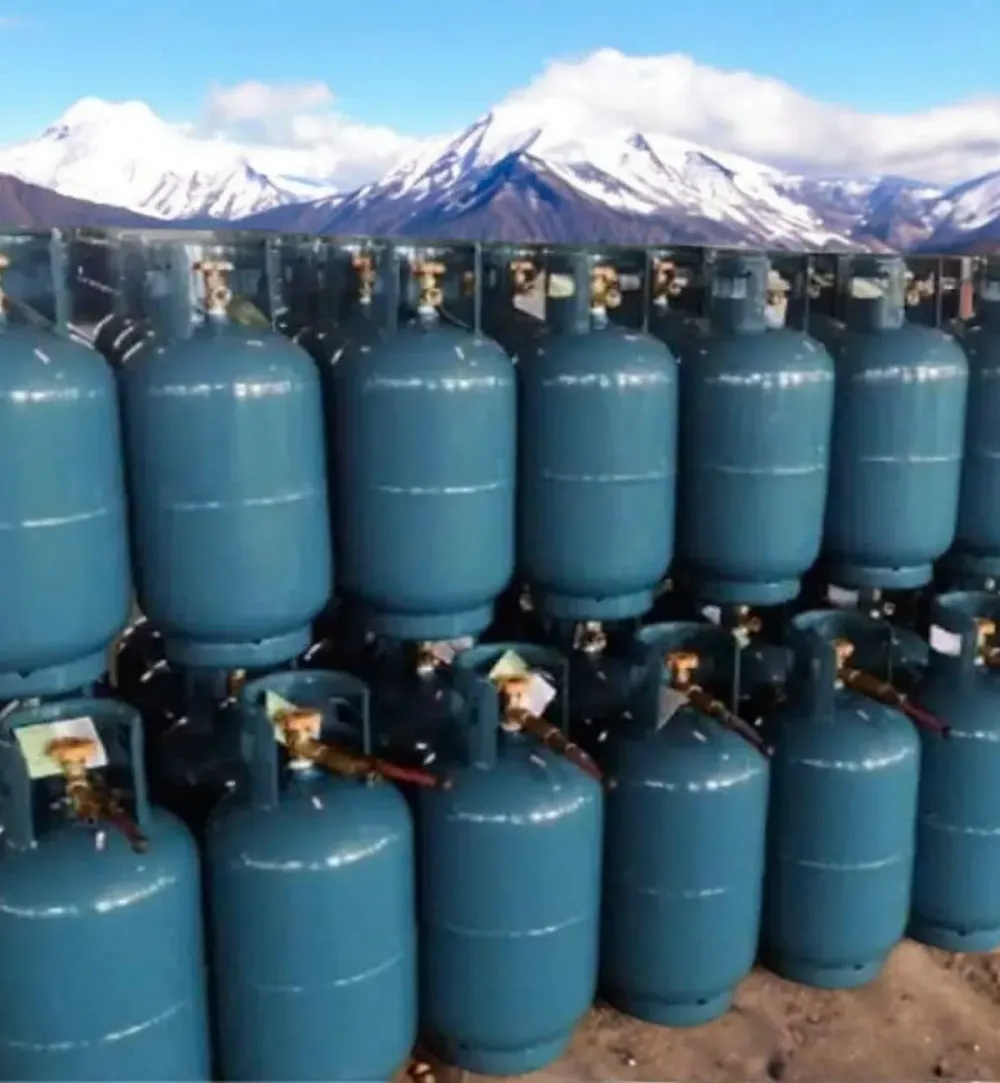
Always keep cylinders upright with the valve on top — empty ones too, because they still contain residual gas.
Fit the valve cap or guard when cylinders are not in use and during transport.
Keep full and empty cylinders in separate, clearly signed areas to avoid delivering the wrong one and to make counting easy.
Arrange cylinders neatly in rows with aisles between rows for inspection and picking; do not stack 45kg cylinders.
Do not store them with flammable goods such as paper, fabric, oil or paint.
Daily leak checks
At the start of each day and when a new batch arrives, walk through the warehouse and pay attention to any smell of gas. If you suspect a cylinder is leaking, brush soapy water around the valve and joints: bubbles show where it leaks. Never test with a flame. Move a leaking cylinder to a ventilated area away from ignition sources and notify your supplier.
If there is a strong smell of gas in the warehouse: do not switch electrical devices on or off, do not use phones in that area, open doors for ventilation, close the valves of suspect cylinders, evacuate people and call for help.
Handling and transport
Do not throw or roll cylinders on hard floors; use a trolley for 45kg cylinders.
On delivery vehicles, cylinders stay upright and are firmly secured so they do not knock against each other.
Keep dented, bulging, heavily rusted or out-of-date cylinders separate and never deliver them to customers — see how to tell a compliant LPG cylinder.
Fire safety in the warehouse
A gas warehouse must meet current fire prevention and fighting requirements: fire extinguishers within easy reach, no-flame and no-smoking signs, safety rules, and staff trained to handle incidents. Specific requirements for distances and equipment depend on the size of the warehouse — work with the local fire authority when setting up a new one. General conditions for opening a shop are covered in opening an LPG dealership.
Frequently asked questions
Can LPG cylinders be stored lying down?
It is not recommended. A cylinder lying down puts liquid gas in contact with the valve, so any leak releases more gas, and it can roll and be knocked. Always keep cylinders upright with the valve on top.
Do empty cylinders need the same care as full ones?
Yes. Empty cylinders still contain residual liquid and vapour, so they must also stand upright, have the valve capped and be kept away from heat, just like full cylinders.
What extra care is needed in hot weather?
Shade the warehouse from direct sun, increase ventilation, do not leave cylinders in the sun while waiting for delivery, and check for leaks more often, because cylinder pressure rises with temperature.
Written by the VietnhatGas technical and sales team — a batch manufacturer of LPG cylinders. This content is for reference; regulations and standards may change, so please check the current texts.
A comparison of steel and composite gas cylinders covering construction, weight, durability, cost, inspection and how common each is in Vietnam, to help dealers choose the right type of cylinder.
A weak gas stove flame, a red or yellow flame or uneven burning can be caused by a nearly empty cylinder, the regulator, the hose, dirty burners or incorrect air adjustment. How to check each cause and when to call a technician.
How long a 12kg gas cylinder lasts depends on the stove’s output and your cooking time. How to estimate your own gas use, how to tell a cylinder is running low by weighing it and tips for saving gas when cooking.
Read article →
Need a volume quote?
Send us the capacity, quantity and brand printing requirements — VietnhatGas will reply with a batch quotation.