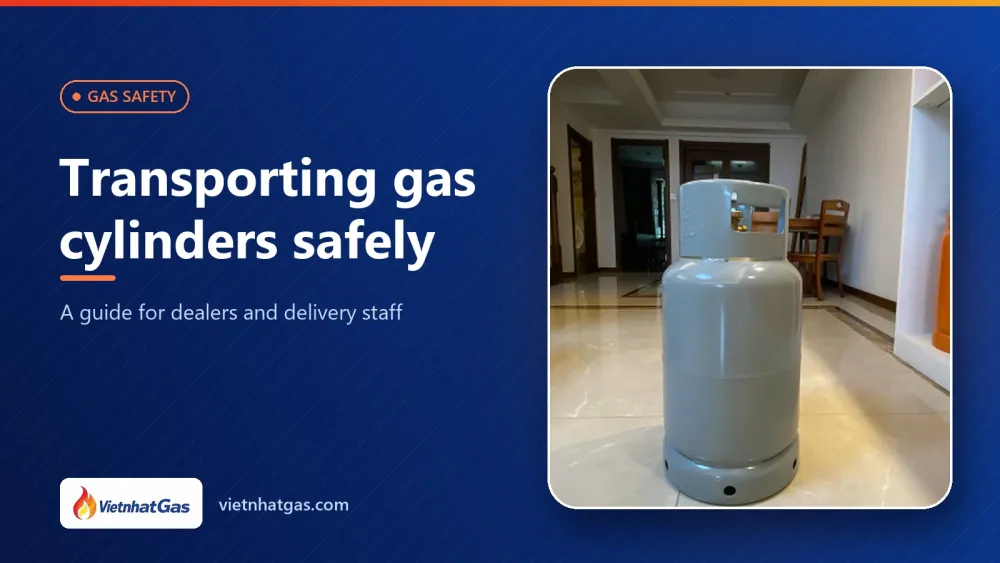
Transporting gas cylinders safely: a guide for dealers and delivery staff
Transporting gas cylinders safely: choosing the vehicle, keeping cylinders upright and firmly secured, closing the valve, handling with care, dealing with a leak on the road and what to watch when delivering to customers’ homes.
VietnhatGas · · 4 min read
Gas dealers deliver cylinders every day to homes, food stalls and restaurants. Transporting gas cylinders the wrong way — carrying them lying down, strapping them loosely, dropping them from the vehicle — can easily dent the cylinder, damage the valve and cause a leak on the road. Below are the basic principles for dealership owners and delivery staff.
Choosing the right vehicle for transporting gas cylinders
Motorbikes: suitable for single deliveries in residential areas; a carrier rack fixed to the bike is needed to keep cylinders upright, and no more than the permitted number should be carried.
Cargo tricycles, small trucks: used when delivering several cylinders or 45kg cylinders to restaurants; the cargo area should be well ventilated, with a frame or partitions to hold cylinders in place.
Vehicles carrying large quantities between the warehouse and the filling plant: must meet the requirements for vehicles carrying dangerous goods under current regulations.
Do not carry gas cylinders in an enclosed space such as a car boot: if there is a leak, the gas will build up and can ignite very easily.
Principles for loading and securing cylinders on the vehicle
Cylinders always stand upright, with the valve at the top. A cylinder lying down can roll, strike the valve, and liquid gas can flow into the valve assembly.
Close the valve and fit the protective cap before loading the cylinder; check that the seal is intact. The valve is the part most easily damaged by knocks — see LPG cylinder handwheel valve.
Secure firmly with straps or a holding frame so that cylinders do not knock into each other or roll when braking hard or cornering.
Keep gas cylinders separate from passengers, petrol and oil, chemicals and other flammable items.
Safety throughout the journey
Never smoke or use a naked flame on the vehicle or when standing next to a vehicle carrying gas.
Do not park for long in strong sun or near a heat source; high temperatures increase the pressure inside the cylinder.
Carry a suitable portable fire extinguisher on delivery trucks.
Load and unload with care
Dented cylinders, broken handles and bent foot rings are usually caused by dropping cylinders from the cargo area onto the ground or dragging them across the floor. Staff should lift and lower cylinders by hand or use a mat or a trolley; 45kg cylinders need two people or a handling aid. Back at the warehouse, stack cylinders as described in storing LPG cylinders in a dealer’s warehouse.
If you find a leak on the road
Stop the vehicle in an open area, away from homes and sources of ignition; switch off the engine.
Do not strike a flame, do not switch electrical equipment on or off, and do not use a phone close to the leak.
Close the cylinder valve if it is safe to do so; lift the leaking cylinder off the vehicle and stand it upright in a well-ventilated place.
Keep people nearby well away; never use a flame to look for the leak.
If it cannot be brought under control or there is a fire, call 114 immediately and inform the dealership.
Delivering cylinders to customers’ homes
Carry the cylinder into the home by hand or on a trolley; do not roll it across the floor.
Check the seal and the inspection date on the cylinder again before handing it over.
Remind the customer to place the cylinder in a well-ventilated spot and close the valve when not in use.
Collect the old cylinder and note its serial number to update your LPG cylinder management records.
Staff training and regulatory compliance
LPG is classed as dangerous goods, so transporting gas cylinders must comply with current regulations on vehicles, drivers and signage. Dealers should train staff in fire prevention and in what to do when gas is smelt, and regularly check vehicles, carrier racks and straps. When preparing to open a new outlet, see also opening an LPG dealership.
For customers who sell food from carts, dealers can share our article on gas for mobile food carts, which covers choosing between mini gas and a 12kg cylinder, securing the cylinder, closing the valve while on the move and daily checks.
Frequently asked questions
Can gas cylinders be carried lying down on a motorbike?
It is not advisable. A cylinder lying down can roll and knock its valve, and liquid gas can flow into the valve. Use a carrier rack that keeps the cylinder upright and secure it firmly.
Do empty cylinders need as much care as full ones?
Yes. An empty cylinder still contains residual gas, so the valve must still be closed, the cylinder kept upright and away from sources of ignition.
Why should a gas delivery vehicle not be left in the sun for long?
Rising temperatures increase the pressure inside the cylinder. Park in a shaded, well-ventilated spot and deliver early.
VietnhatGas supplies 12kg and 45kg LPG cylinders and valves to dealers, delivered under our delivery policy. Need to replace cylinders dented in transport or add new ones? Send a request on our quotation page.
Written by the VietnhatGas technical and sales team — a batch manufacturer of LPG cylinders. This content is for reference; regulations and standards may change, so please check the current texts.
Practical tips on gas dealer customer retention: fast delivery, reminders before the gas runs out, free safety checks, transparent prices, loyalty schemes, looking after restaurants and keeping customer records.
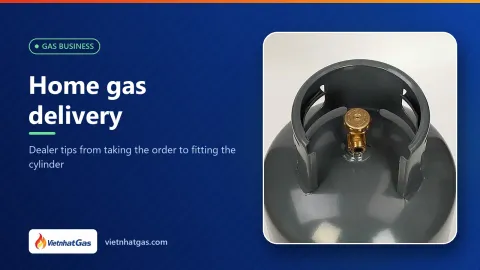
Home gas delivery tips for dealers: committing to time slots, taking orders by phone and Zalo, professional staff, fitting the cylinder and testing for leaks at the customer’s home, safety on the road and handling complaints.
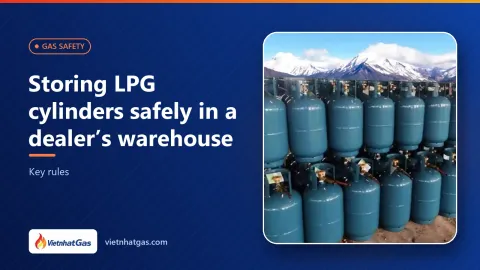
Rules for storing LPG cylinders at dealers and filling stations: warehouse location, how to stack cylinders, separating full and empty ones, leak checks and fire safety.
Read article →
Need a volume quote?
Send us the capacity, quantity and brand printing requirements — VietnhatGas will reply with a batch quotation.