Gas for mobile food carts: choosing a gas source and staying safe
Should carts and food stalls on wheels use mini gas or a 12kg cylinder with a wok burner? How to secure the cylinder, protect the hose, close the valve when moving, avoid the sun, store spare canisters and check every day.
VietnhatGas · · 4 min read
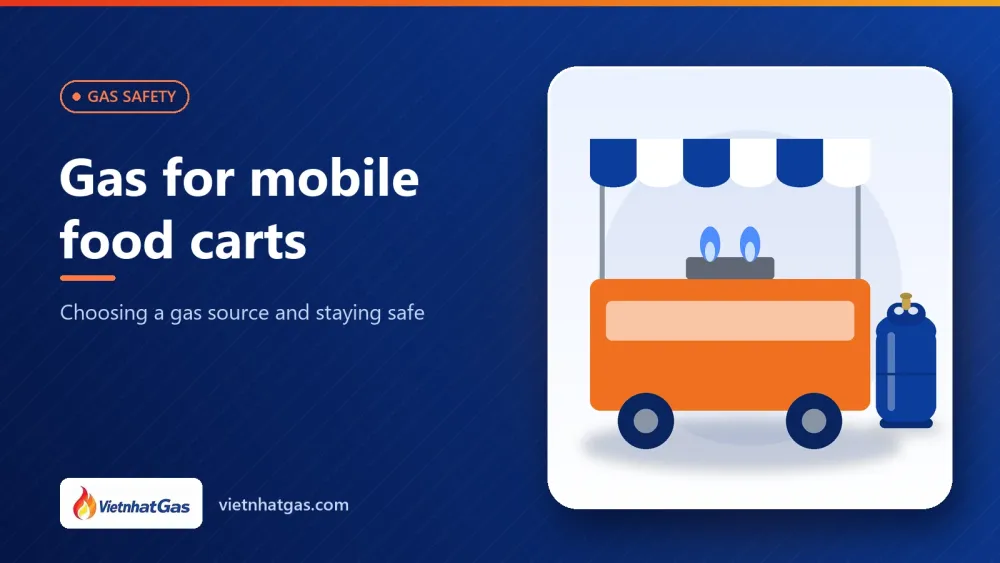
Pushcarts selling cakes, skewer grill carts and food carts all need a compact, steady flame, in conditions quite different from a fixed kitchen. This article helps cart owners choose gas for mobile food carts, arrange the cylinder and hose, and keep up the habit of checking every day.
How does a stove on a cart differ from a fixed stove?
Shaking and jolting when the cart is pushed over potholes and kerbs makes cylinders and canisters shift, and joints can easily work loose.
Sun and heat: the cart stands outdoors for many hours; the pressure inside cylinders and canisters rises with temperature.
Cramped space: the cylinder, stove, food and spare canisters are squeezed into a few square metres.
Crowds: customers and children stand right next to the counter.
Mini gas or a 12kg cylinder with a wok burner?
The choice depends on the food you sell and how much heat you need each shift:
Criterion
Portable gas stove with canisters
12kg cylinder and large burner
Suitable dishes
Grilled skewers, light frying, reheating, medium pots
Large stock pots, deep frying, high heat for long periods
Equipment needed
Stove and canisters, no regulator needed
Regulator and hose of the right type for the burner and the cylinder valve
Best for
Small pushcarts, temporary stalls, selling for part of the day
Large carts, selling for many hours at a stretch
Carts that use a cylinder usually choose a 12kg gas cylinder because one person can lift it on and off; dishes that need a strong flame can use a cast-iron gas wok burner via a suitable regulator. VietnhatGas does not sell regulators or hoses; buy ones of clear origin from a gas equipment shop.
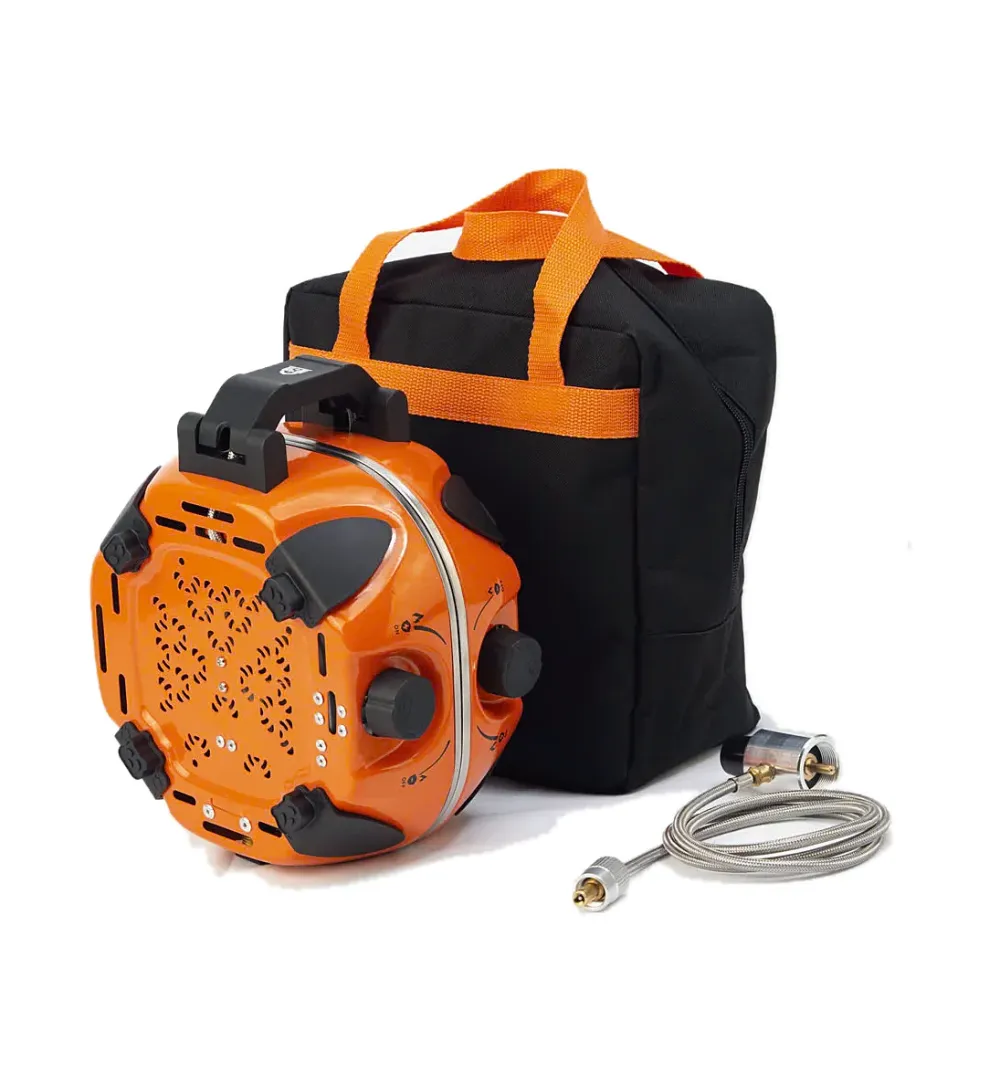
A portable gas stove with a carry bag and a compact hose suits small carts that need to pack away quickly after selling.
Keeping the cylinder steady on the cart
Stand the cylinder upright in a rack fixed to the cart floor, and add a strap so that it cannot be thrown about when the cart tilts.
The cylinder space must be well ventilated: do not shut the cylinder in a closed cupboard; if there is a screen around it, leave ventilation openings at floor level, because LPG is heavier than air and any leak will collect in low places.
Place the cylinder away from the burner and the frying area, with a heat shield between the two.
Stand the portable gas stove on a flat, non-slip surface and do not use a tray that covers the whole stove.
Keep the hose just long enough, with a little slack, and do not run it over hot spots, sharp edges or the folding gaps of the cart’s roof or doors.
Tighten clips at both ends; fix the hose to the side of the cart so that it is not pulled taut when the cart shakes.
Look along the hose every day; replace it at once if it is hardened, cracked or swollen — for the specific signs, see when a gas hose needs replacing.
When moving and when selling
Close the cylinder valve and remove the canister from the portable stove before pushing or transporting the cart.
Avoid the sun: stand in the shade and put a cover over the cylinder area.
Spare canisters: keep them upright in a separate box, with their caps on, away from the stove and from where customers stand; bring only enough for one session — for how to store canisters, see storing mini gas canisters.
Look at the cylinder body, valve, canisters, rack and straps: no dents, heavy rust or looseness.
Open the valve and brush soapy water over the joints; if bubbles appear, close the valve and redo the connection, and never test with a flame.
Light the burner and check that the flame is blue and burns evenly.
The cart should carry a portable fire extinguisher in an easy-to-reach place, away from the stove; for which type to choose, see fire extinguishers for gas kitchens (VietnhatGas does not sell fire extinguishers). If you smell gas: turn off the stove, close the valve, do not switch electrical equipment on or off, keep everyone away and call the fire service on 114 if it cannot be brought under control.
Frequently asked questions
Should a small pushcart use a 12kg cylinder?
Only if the cart has a secure, well-ventilated place for the cylinder away from the stove. Carts that are too cramped should use a portable gas stove.
Can spare gas canisters be kept right under the stove?
This is not advisable. The area under the stove gets hot and gas cannot escape easily if there is a leak; keep canisters in a separate, ventilated box away from heat sources.
Do I need permission to use gas on a food cart?
Street trading and the use of open flames in public places are managed by the local authorities; ask the ward or commune where you sell about the current regulations.
Choosing the right gas for mobile food carts and checking it regularly helps each session run smoothly. VietnhatGas supplies portable gas stoves, butane mini gas canisters, 12kg cylinders and wok burners to dealers serving cart owners. Send your requirements on our quotation page.
Written by the VietnhatGas technical and sales team — a batch manufacturer of LPG cylinders. This content is for reference; regulations and standards may change, so please check the current texts.
Why gas cylinders sweat and frost over during long cooking, what the frost line tells you, how to deal with it properly, what you must never do and when ice is a sign of a gas leak.
A guide to restaurant gas cylinder installation for restaurants and commercial kitchens: 12kg or 45kg cylinders, where to place them, cylinder manifolds, regulators, piping, leak detectors and safe operating habits.
LPG, LNG and CNG compared by composition, liquefaction, storage, transport and typical users, plus the most important safety difference: whether the gas is heavier or lighter than air.
Read article →
Need a volume quote?
Send us the capacity, quantity and brand printing requirements — VietnhatGas will reply with a batch quotation.