How to store butane canisters: a guide for homes, shops and warehouses
Butane canisters contain liquefied gas under pressure, so they need to be kept in the right place. A guide to choosing where to keep them at home, stacking cartons and managing canisters in shops and warehouses, and regular checks for safe use.
VietnhatGas · · 4 min read
Because butane canisters are small, they are often stored carelessly: in a kitchen cupboard right next to the cooker, on top of the fridge, in the boot of a car parked in the sun. In reality, each canister is a container of liquefied gas under pressure, and that pressure rises with temperature. Knowing how to store butane canisters properly keeps them sealed, keeps the shell sound and lets you use them safely until they are empty. This article gives guidance for shops, warehouses and individual households.
Why do butane canisters need to be stored carefully?
High temperatures increase the pressure inside the canister; beyond its design limit, the canister may bulge, leak gas or explode.
Humidity rusts the shell, especially at the base and along the seams, reducing the ability of the thin steel shell to withstand pressure.
Knocks dent the shell and damage the valve, causing slow leaks that are hard to detect.
Leaking gas is heavier than air and collects in low, enclosed places where it can easily ignite — see what is butane.
The maximum storage temperature varies between manufacturers; always follow the instructions printed on the canister.
Storing butane canisters in shops and warehouses
The larger the number of canisters, the greater the risk. The general principles for gas storage are covered in storing LPG cylinders in a dealer’s warehouse (which focuses on large gas cylinders); for butane canisters you also need to:
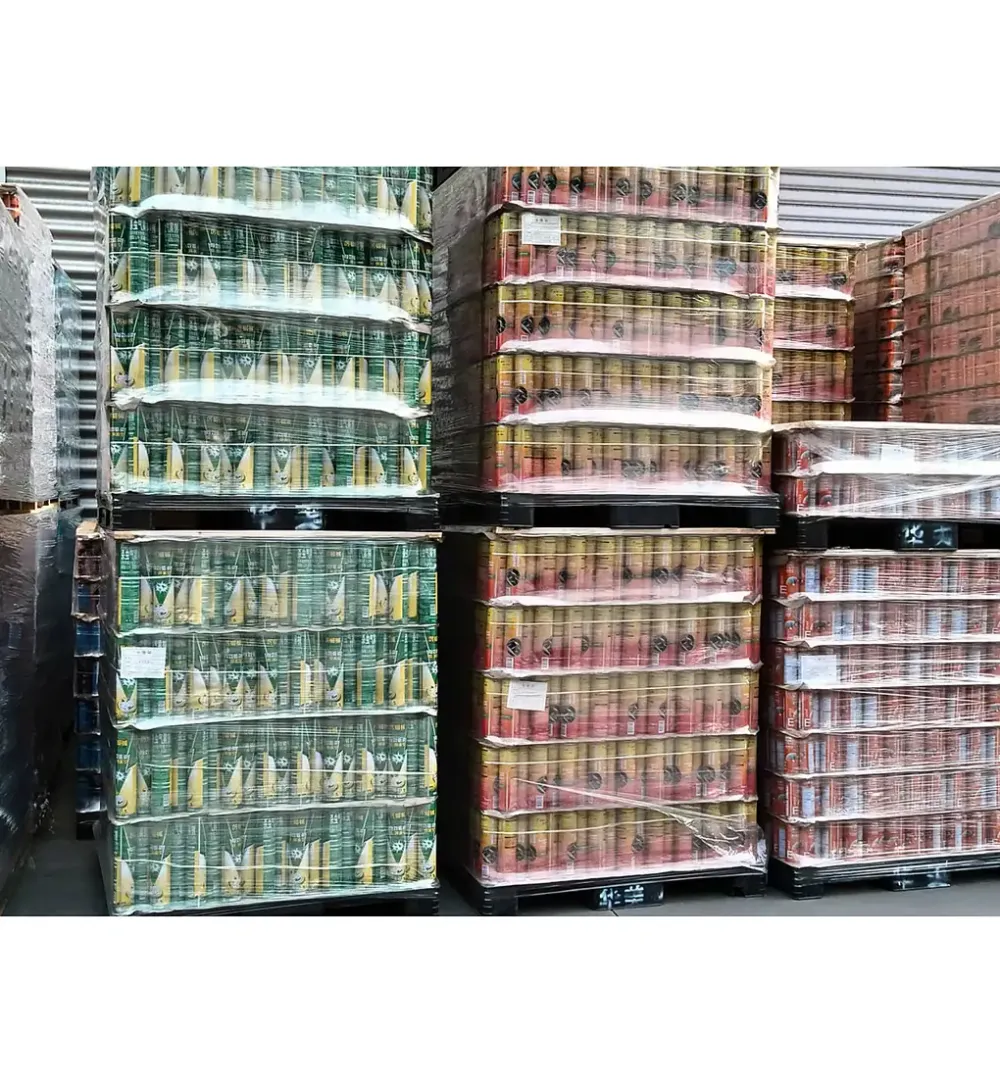
Stack cartons according to the symbols: follow the arrows and the stacking limit printed on the carton; if stacked too high, the cartons at the bottom are crushed and the canisters get dented.
Raise them off the floor on pallets; do not place cartons on a damp floor or against a damp wall.
Leave aisles between rows for inspection, loading and unloading and emergency exit.
Ensure good ventilation and avoid metal roofs that radiate heat; do not store near cooking areas, welding and cutting work or electrical equipment that may produce sparks.
No smoking, no naked flames, with warning signs; provide firefighting equipment in line with current regulations and train staff to use it.
First in, first out: write the date received on each carton and sell older batches first — for how to read dates and batch codes, see butane canister expiry date.
Separate faulty canisters: canisters that are dented, rusty, bulging or smell of gas, or cartons that are wet or torn, should be moved to a separate, well-ventilated area and marked not for sale.
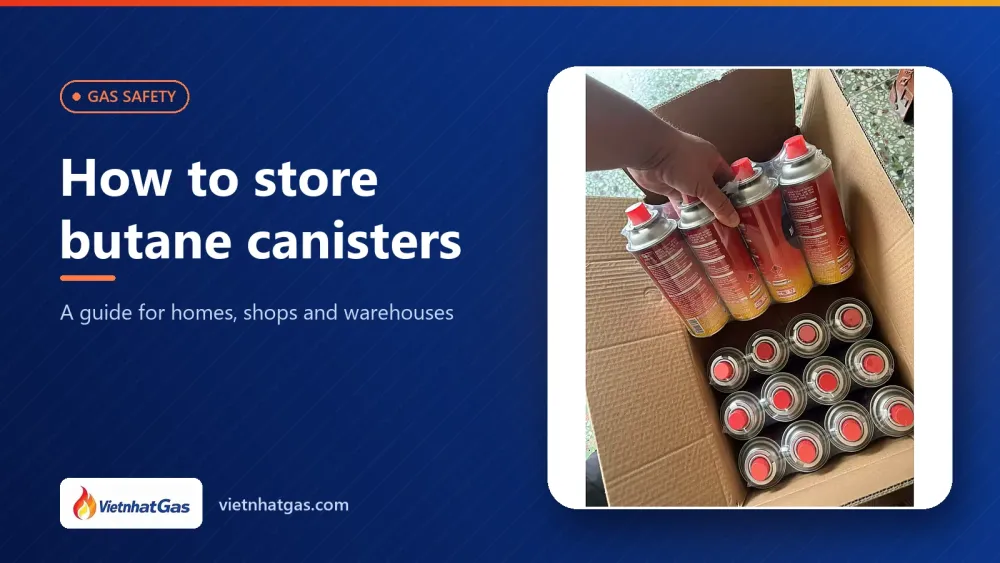
Cartons of butane canisters should be placed on pallets, stacked the right way up, with aisles left between rows.
Storing butane canisters at home
Choose a cool, dry, well-ventilated spot out of direct sunlight.
Keep them away from heat sources: do not store them next to a cooker in use, an oven, a microwave, a heater or behind the fridge.
Do not leave them in a car parked in the sun, as the temperature inside rises very high. On a long trip, take only as many canisters as you need — see portable gas stove for camping.
Always fit the cap to protect the valve.
Remove the canister from the stove after each use; do not put the stove away with the canister still fitted.
Keep canisters upright; do not let them roll around and do not put heavy objects on top.
Do not stockpile; keep only enough canisters for the short term.
Regularly check the canisters in storage
Check your storage spot from time to time: are any canisters rusty, dented, smelling of gas or unusually light? A canister that smells of gas should be taken outdoors, away from flames. If the smell of gas has spread indoors: do not switch electrical equipment on or off, open doors and windows for ventilation, leave the area and call for help from outside, calling the fire service on 114 if necessary — see how to check for gas leaks at home. Empty or faulty canisters: do not puncture them, do not burn them and do not take them to be refilled — see can butane canisters be refilled.
Renters with little storage space may also find our tips on choosing a gas stove for a rented room useful, including how to set up the stove safely in a small space and where to keep spare canisters.
Frequently asked questions
Should butane canisters be kept in the fridge?
No. A fridge is an enclosed space with electrical components; if a canister leaks, the gas will build up inside. A canister that is too cold also gives a weak flame.
Can butane canisters be kept under a motorbike seat?
Only for a short journey, taking them out as soon as you arrive; the storage compartment heats up very quickly in the sun.
What should you do if a carton of butane canisters gets wet in the rain?
Dry each canister, check for rust and dents, and move the good canisters to a dry carton; do not use the wet carton for further stacking.
Written by the VietnhatGas technical and sales team — a batch manufacturer of LPG cylinders. This content is for reference; regulations and standards may change, so please check the current texts.
How to spot low-quality butane canisters by the label, batch code, can body, valve and price; why caution is needed and which documents dealers should request from their suppliers.
Private-label (OEM) butane mini gas canisters: who they suit, what can be customised, mandatory label content, the ordering process, minimum quantities and paperwork.
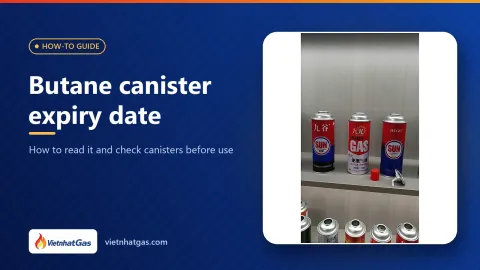
Where the production date, expiry date and batch code of a butane canister are printed, what the shelf life means for a pressurised canister, how to check a canister before use and what to do with expired ones.
Read article →
Need a volume quote?
Send us the capacity, quantity and brand printing requirements — VietnhatGas will reply with a batch quotation.