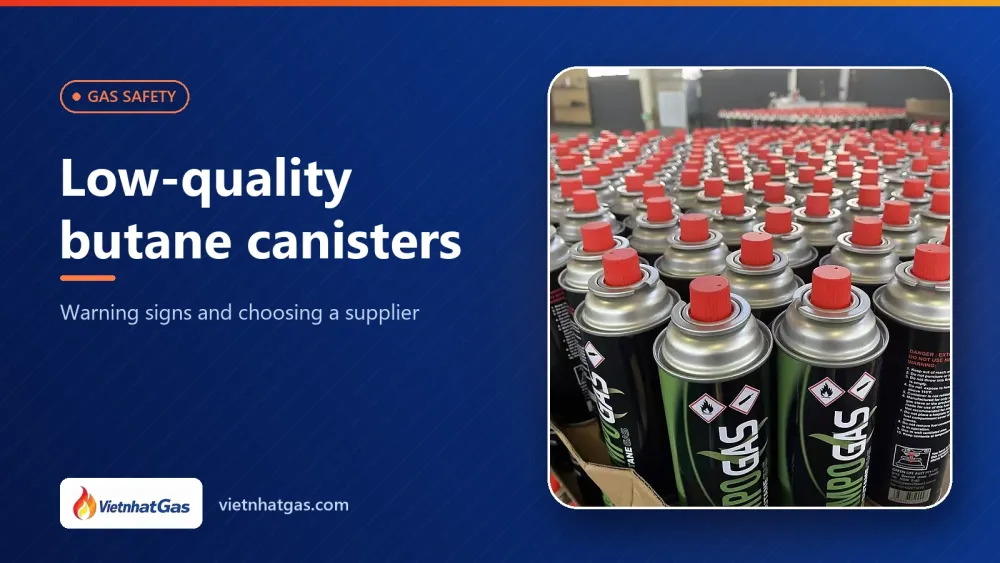
Low-quality butane canisters: warning signs and choosing a supplier
How to spot low-quality butane canisters by the label, batch code, can body, valve and price; why caution is needed and which documents dealers should request from their suppliers.
VietnhatGas · · 4 min read
Because each canister costs little, many people buy mini gas canisters out of habit and pay little attention to where they come from. In reality, low-quality butane canisters may be underfilled, have thin walls or valves that do not seal properly, causing gas leaks or making them unsafe to use. Below are the warning signs buyers can look for.
Why be wary of mini gas canisters of unknown origin?
A mini gas canister holds liquefied gas under pressure, mainly butane — see what butane gas is. When the can body, the valve or the fill quantity is not up to standard, the risks can include:
Valves and joints that do not seal, so gas escapes during storage or when the canister is fitted to the stove.
A weak, flickering flame because the gas has the wrong composition or was filled incorrectly.
Thin can walls that dent and rust easily and withstand pressure poorly in hot weather.
Warning signs on the packaging and label
Missing manufacturer information: no name or address, or only a vague one, for the organisation responsible for the goods.
No production date or batch code, or the information has been erased or overprinted.
No safety warnings or instructions for use on the canister.
Poor printing: blurred text, colours out of register, spelling mistakes, or a hastily applied sticker instead of printing on the can body.
Loose stock: canisters sold individually with no clear original carton.
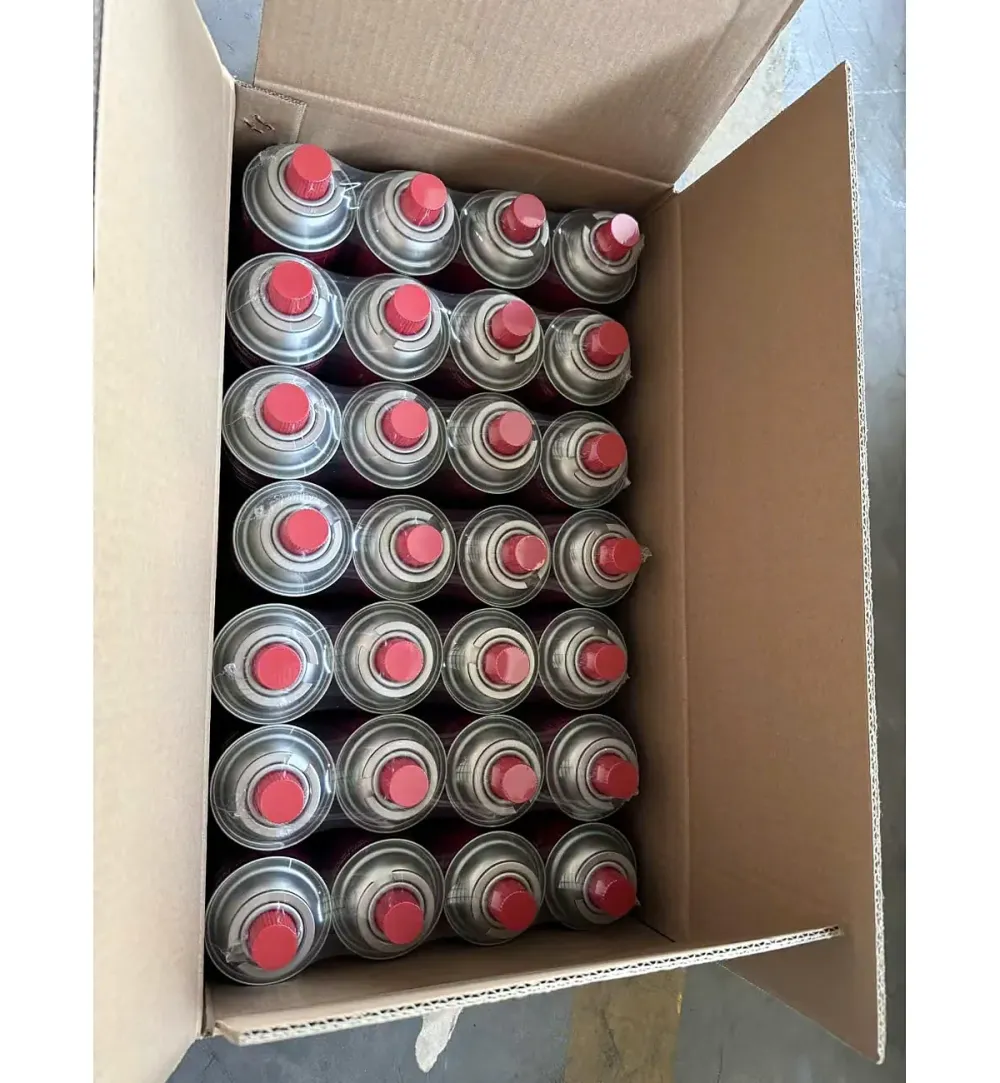
Mini gas canisters of clear origin usually come in full cartons, with each canister still carrying its valve cap.
Warning signs on the can body and valve
Unusual weight: a canister noticeably lighter than others of the same type may be underfilled; an unusually heavy one is also worth querying with the supplier.
Dents, rust or bulging on the body, rim or base: do not use the canister.
Leaking valve: a hissing sound or a smell of gas before the canister is fitted to the stove; a missing or cracked valve cap.
If you find a leaking canister: do not use it, do not test it with a flame, take it to an open area away from flames and inform the seller. If you smell gas indoors, do not switch electrical equipment on or off, open doors and windows for ventilation and leave the area.
Unusually low prices often come with risks
The price of a mini gas canister depends on the price of gas, the steel can, the valve, the packaging and the cost of testing. Goods sold far below the going rate and without an invoice have usually been cut back at some stage — this is a familiar route for low-quality butane canisters to find their way into shops. Canisters advertised as “refilled” are also suspect, because mini gas canisters are single-use only — see can mini gas canisters be refilled.
How should users buy?
Buy from shops and dealers with a clear address, where faulty canisters can be exchanged.
Choose canisters with complete labelling and the right specification for your stove, for example 220 – 250g butane mini gas canisters; check the can body, valve and cap before fitting.
It is not advisable. A dent can weaken the can body or affect the valve and the fitting; swap it for another canister.
What should I do if I hear hissing when fitting the canister to the stove?
Turn the stove knob off, remove the canister and take it to an open area away from flames. Refit it correctly in the groove; if it still hisses, do not use that canister and inform the seller.
How can I tell if a mini gas canister is underfilled?
Weigh it and compare it with a canister of the same type. If many canisters in a batch are noticeably lighter, raise it with the supplier.
VietnhatGas manufactures butane mini gas canisters with clear labels, batch codes and manufacturer information for dealers and businesses. See our clean butane mini gas category or send a request on our quotation page.
Written by the VietnhatGas technical and sales team — a batch manufacturer of LPG cylinders. This content is for reference; regulations and standards may change, so please check the current texts.
Private-label (OEM) butane mini gas canisters: who they suit, what can be customised, mandatory label content, the ordering process, minimum quantities and paperwork.
Butane canisters contain liquefied gas under pressure, so they need to be kept in the right place. A guide to choosing where to keep them at home, stacking cartons and managing canisters in shops and warehouses, and regular checks for safe use.
Where the production date, expiry date and batch code of a butane canister are printed, what the shelf life means for a pressurised canister, how to check a canister before use and what to do with expired ones.
Read article →
Need a volume quote?
Send us the capacity, quantity and brand printing requirements — VietnhatGas will reply with a batch quotation.