Fitting a mini gas canister: which canister fits which stove?
How to match mini gas canisters to a stove, the difference between 220 – 250g and 120g canisters, the steps for seating the notch and moving the locking lever, signs of a poor fit and what to do when a canister will not lock.
VietnhatGas · · 5 min read
A canister fitted off its notch or the wrong canister for the stove is behind many cases of a stove leaking gas or failing to light. Before fitting a mini gas canister, you need to know what type of canister it is, which canisters the stove takes and what a correct fit looks like.
What is on the top of a mini gas canister?
Portable gas stoves with the canister fitted at the side or in a separate canister box usually take long cylindrical canisters, commonly known as cassette-type canisters. The top of the canister has three main parts:
The needle valve in the centre of the top: it opens only when pressed into the stove’s connector.
The locating notch on the rim of the canister neck: it must line up with the locating ridge on the stove for the canister to sit in the right place.
The cap: it protects the valve and should only be removed just before fitting.
Which canisters can be used with which stoves?
The most reliable guide is the stove manufacturer’s instructions, which usually state the suitable type of canister. When matching them, check three points:
Connector type: a stove that takes needle-valve cassette canisters should be fitted with canisters of the same type, such as 220 – 250g butane mini gas canisters.
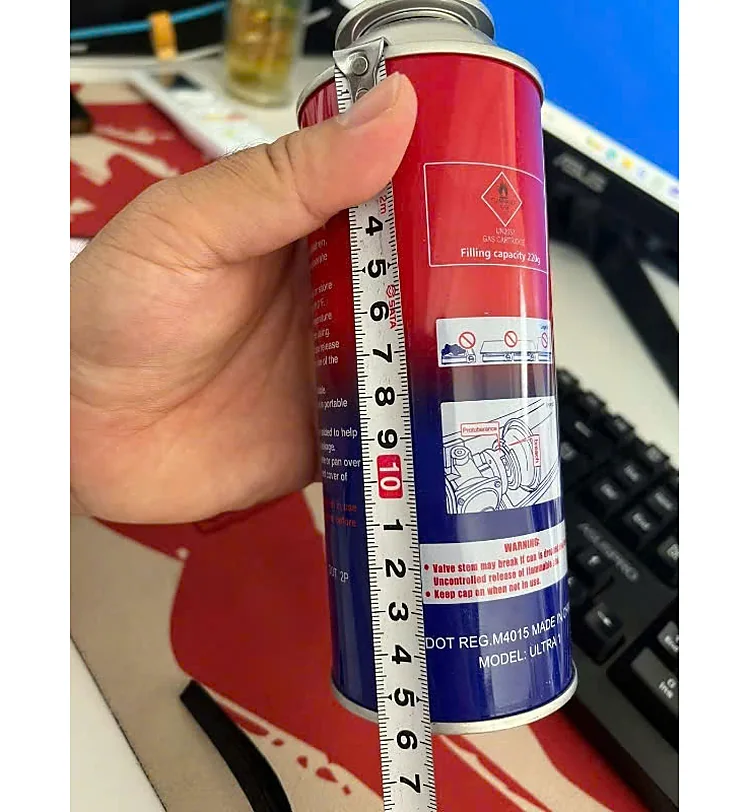
Compartment size: 220 – 250g is the familiar size; 120g mini gas canisters are shorter, and some stoves hold them firmly while others do not. Test the fit before buying in quantity.
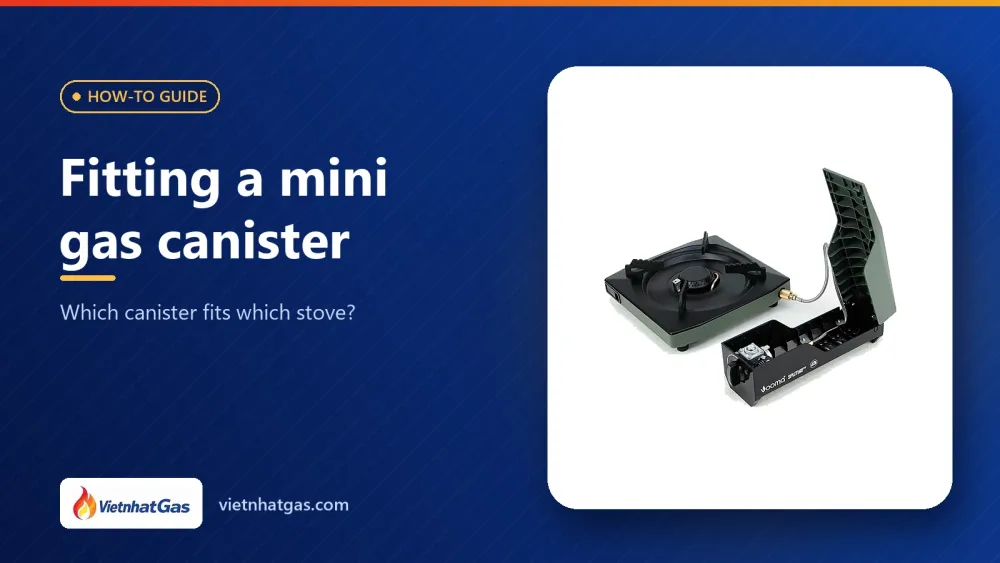
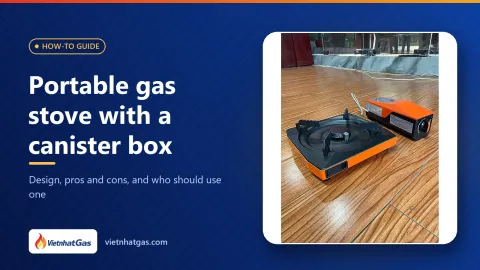
Stove type: on stoves with a separate canister box such as the VNG001 portable gas stove, the canister fits into the canister box, which has its own notch and locking lever.
The canister must also be within its expiry date and undamaged — how to check is covered in mini gas canister expiry dates.
Canisters come in different heights, so smaller canisters should be test-fitted in the canister compartment.
Steps for fitting a mini gas canister to a stove
Place the stove on a flat surface; turn the knob to the off position and move the locking lever to the open position.
Remove the cap and look at the top of the canister: the valve is clean, the neck is not dented and the notch is intact.
Turn the canister so that the notch faces the way the stove requires; there is usually a guide mark next to the connector.
Push the top of the canister into the connector so that the notch engages with the ridge, and let the body of the canister rest neatly in the compartment.
Move the locking lever to the locked position. The lever should snap down smoothly with normal hand pressure; if you have to force it, the canister is not seated in the notch correctly.
Pause for a few seconds to listen and smell: only when there is no hissing and no smell of gas should you close the compartment cover and light the stove.
The locking lever will not snap down, springs back after snapping down, or the canister can still turn or wobble after locking.
Hissing or a smell of gas at the connection even after refitting the canister the right way round.
A flickering flame that flares up and dies down, or flames at the canister connection.
The compartment cover will not close because the canister is too long, too short or misaligned.
If this happens: turn off the knob, release the locking lever, remove the canister, refit the cap and take the canister to a well-ventilated place, away from flames. If the smell of gas has spread through the room, do not switch anything electrical on or off, open the doors to ventilate and leave the area. If the stove will not light for other reasons, see portable gas stove won’t light.
What should you do if the canister will not lock?
Remove it, check the direction of the notch and refit it once, without using force.
Try another canister of the same type. If the other canister locks, the fault lies with the first one: set it aside and tell the seller.
If no canister will lock, suspect a fault in the stove, such as a loose locking lever or a damaged seal: stop using it and take the stove to be checked or repaired under warranty.
Can another brand’s mini gas canister be fitted to my stove?
Yes, if it has the same connector type and the size stated in the stove’s instructions, and the locking lever snaps down smoothly with no hissing when it is fitted.
Can a 120g canister be used instead of a 250g canister?
It depends on the stove. Only use one if the stove’s instructions allow it, or if a test fit shows that the canister is held firmly and locks smoothly and tightly.
Can I carry on using the stove if there is still a faint smell of gas after fitting the canister?
No. Take the canister out to a well-ventilated place and check the notch and the seal; if there is still a smell after refitting, stop using it.
VietnhatGas supplies 220 – 250g and 120g butane mini gas canisters and portable gas stoves to dealers and shops. Send a request on our quotation page.
Written by the VietnhatGas technical and sales team — a batch manufacturer of LPG cylinders. This content is for reference; regulations and standards may change, so please check the current texts.
Where the production date, expiry date and batch code of a butane canister are printed, what the shelf life means for a pressurised canister, how to check a canister before use and what to do with expired ones.
How long a 220 – 250g mini gas canister lasts depends on the stove output and flame setting. How to estimate usage time yourself, why mini gas canisters weaken in cold weather and tips for economical, safe use.
A portable gas stove with a canister box holds the canister in a separate box connected to the stove by a hose. How it compares with side-loading stoves, its pros and cons, who it suits and what to check on the hose and box.
Read article →
Need a volume quote?
Send us the capacity, quantity and brand printing requirements — VietnhatGas will reply with a batch quotation.