How to use a portable gas stove safely: 8 key tips
Eight tips for using a portable gas stove: fit the canister correctly, never cover the stove with a large grill plate, use it in a ventilated place, remove the canister after use.
VietnhatGas · · Updated · 3 min read
Portable gas stoves are compact, light and work anywhere, so they are found in hotpot restaurants, barbecue restaurants, homes and on camping trips. With that convenience comes one thing to remember: the gas canister sits right next to or under the flame. Learning to use a portable gas stove safely takes only a few minutes, but prevents most common incidents.
1. Check the stove and canister before fitting
Check that the rubber seal in the canister compartment is intact, not cracked or deformed, and that the canister is not dented or rusty, with a clean valve. Only use canisters within their shelf life and of the type the stove supports — see our butane mini gas range.
2. Fit the canister correctly
Place the canister in the compartment so the notch on its neck lines up with the stove’s connector, then move the lever to the locked position. A misaligned canister can leak at the connection. If you hear hissing or smell gas after fitting, remove the canister, check the seal and fit it again.
3. Never cover the stove with a large grill plate or pan
This is the most common cause of incidents. A grill plate, stone griddle, pan or large pot that extends over the canister compartment reflects heat downwards, heating the canister and raising the pressure inside it. Only use cookware that fits the burner and does not cover the canister compartment.
4. Do not place two stoves side by side or near heat
Do not put two portable stoves next to each other under one large tray, and do not place a stove next to a charcoal stove, an oven or in direct sunlight. Outside heat warms the canister just as heat from the stove itself does.
5. Use it in a ventilated place on a stable surface
Place the stove on a flat, stable, non-flammable table. In a closed room, open a door or use an extractor fan. Outdoors, shield the flame from wind just enough to keep it lit, but do not enclose the stove.
6. Turn off correctly and remove the canister after use
Turn the knob to off, wait until the flame is fully out, then release the lever and remove the canister. Do not leave the canister in the stove when storing it, transporting it or not using it for a long time.
7. Store mini gas canisters properly
Put the plastic cap back on the canister after removing it.
Store in a dry, cool, shaded place; do not leave canisters in a car boot or a closed car in the sun.
Do not puncture, refill or burn empty canisters.
Keep out of reach of children.
8. What to do if you smell gas or see an abnormal flame
If you smell gas: turn off the stove, release the lever to remove the canister, open doors for ventilation and do not switch nearby electrical devices on or off. If the flame turns red, burns at the canister connection or the canister feels unusually hot: turn the knob off immediately if it is safe to do so, move away and do not pour water on a hot canister. Stop using the stove until it has been checked.
Which portable stove is safer?
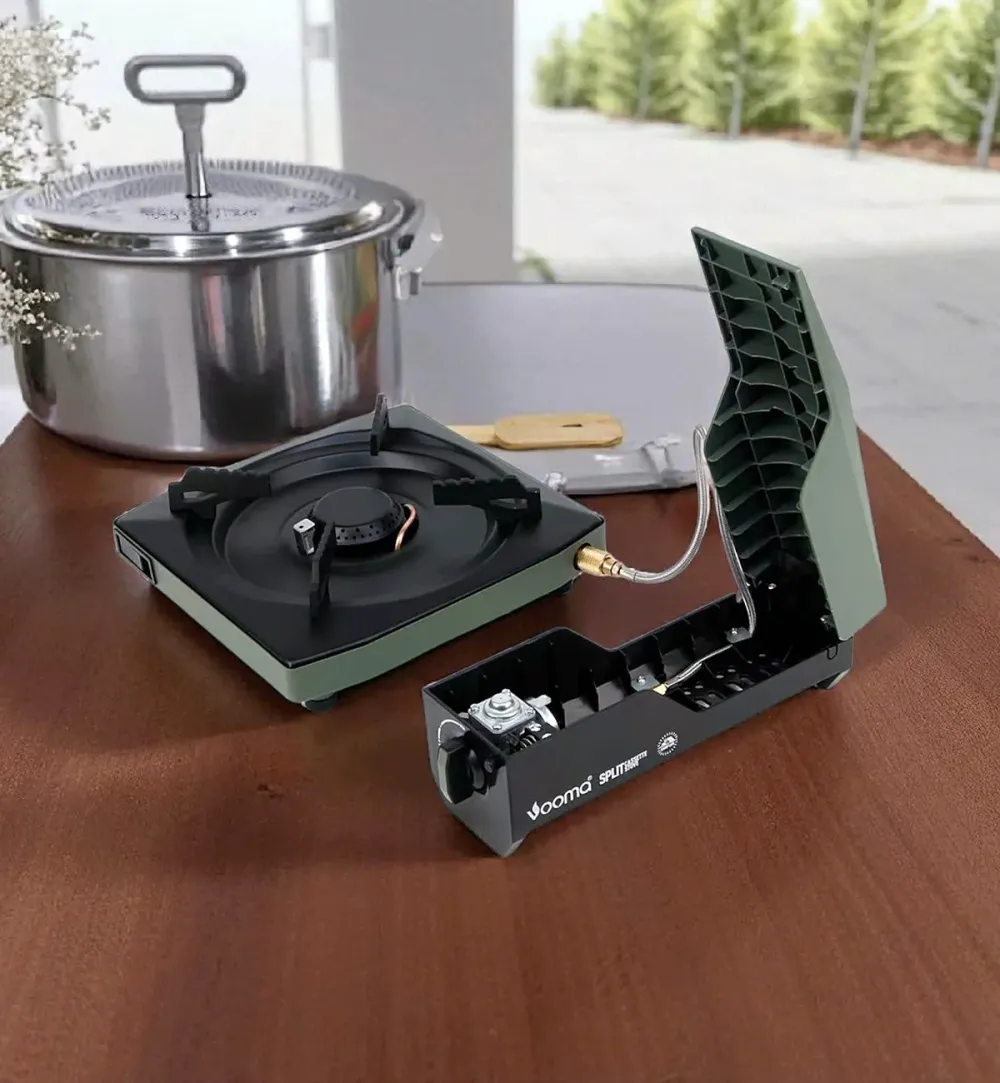
Besides good habits, stove design matters. Models with a separate gas box keep the canister away from the stove, connected by a hose, so the canister does not sit next to the flame — for example the BG003 portable gas stove and the VNG001 portable gas stove. See more models in our portable gas stoves category.
Frequently asked questions
Can I use a portable stove with a stone griddle or a large grill plate?
Do not use trays, griddles or pans that extend over the canister compartment. For grilling, choose cookware that fits the burner or use a stove with a separate gas canister.
Can I leave a partly used canister in the stove?
It is not recommended. After use, remove the canister from the stove, put the cap back on and store it separately in a cool, ventilated place.
Can a portable gas stove be used indoors?
Yes, if the room is well ventilated, the stove stands on a stable surface and you follow the tips above. Do not use it in a closed room without ventilation.
Dealers and distributors who want to sell portable gas stoves and mini gas under the VietnhatGas brand or their own brand: see our distribution franchise or send a request on our quotation page.
Written by the VietnhatGas technical and sales team — a batch manufacturer of LPG cylinders. This content is for reference; regulations and standards may change, so please check the current texts.
A comparison of steel and composite gas cylinders covering construction, weight, durability, cost, inspection and how common each is in Vietnam, to help dealers choose the right type of cylinder.
A weak gas stove flame, a red or yellow flame or uneven burning can be caused by a nearly empty cylinder, the regulator, the hose, dirty burners or incorrect air adjustment. How to check each cause and when to call a technician.
How long a 12kg gas cylinder lasts depends on the stove’s output and your cooking time. How to estimate your own gas use, how to tell a cylinder is running low by weighing it and tips for saving gas when cooking.
Read article →
Need a volume quote?
Send us the capacity, quantity and brand printing requirements — VietnhatGas will reply with a batch quotation.