Portable gas stove with a canister box: design, pros and cons, and who should use one
A portable gas stove with a canister box holds the canister in a separate box connected to the stove by a hose. How it compares with side-loading stoves, its pros and cons, who it suits and what to check on the hose and box.
VietnhatGas · · 4 min read
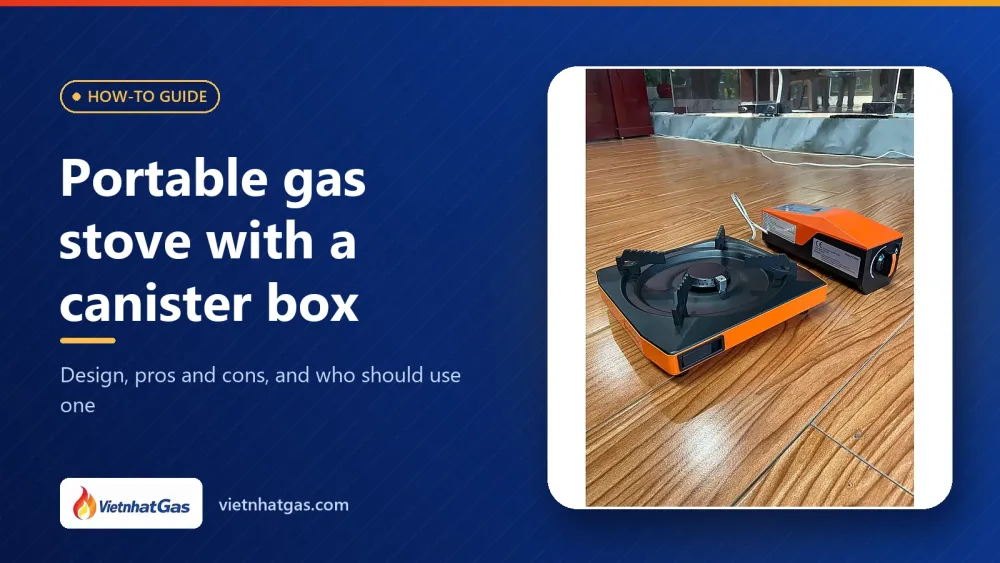
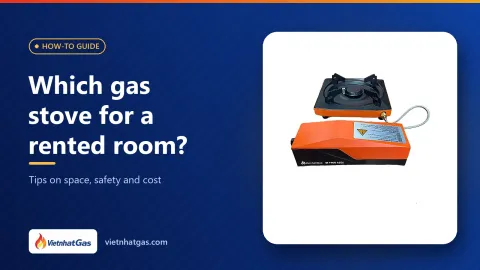
Most familiar portable gas stoves have a canister compartment right at the side, next to the burner. A portable gas stove with a canister box is different: the canister sits in a separate box, connected to the cooktop by a hose. Below are its design, pros and cons, who it suits and the specific points to check.
What is a portable gas stove with a canister box?
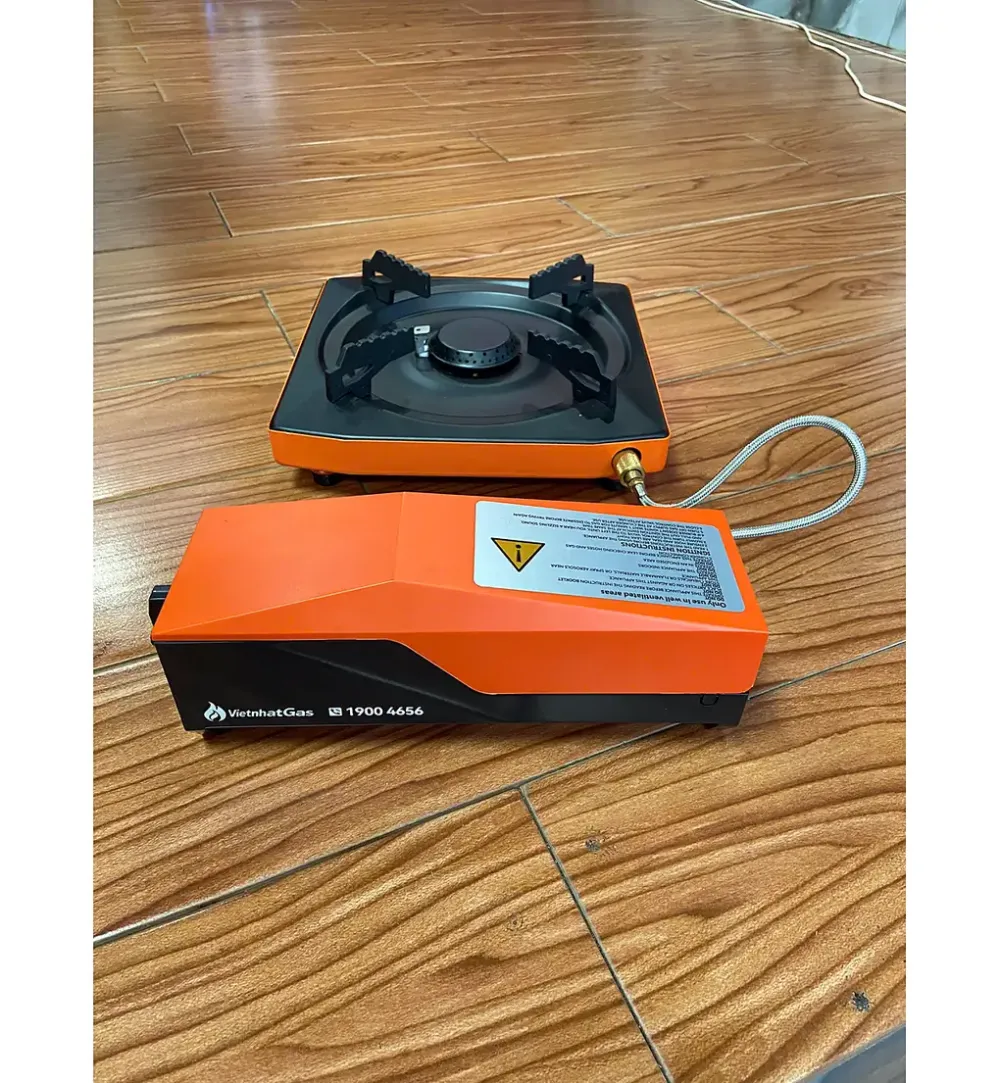
The stove has three parts: the cooktop (burner, pot support, flame control knob and, depending on the model, an igniter), the canister box (where the canister is fitted, with a coupling to the canister valve) and the hose connecting the box to the cooktop. When cooking, the cooktop sits in the middle of the table, while the canister box is placed off to one side, a hose length away from the burner. Two VietnhatGas models of this type are the VNG001 portable gas stove and the VNG/BG003.
How does it differ from a side-loading stove?
On a side-loading stove, the canister sits next to the burner, separated only by a heat shield, so oversized pots or trays can easily reflect heat down onto the canister — a risk discussed in our article on how to use a portable gas stove safely. The canister box design changes precisely where the canister sits.
Criterion
Side-loading canister
Separate canister box
Canister position
Right next to the burner
In a separate box, a length of hose away from the burner
Gas path
Canister plugs straight into the valve assembly
Through a hose and two joints
Changing the canister
Done right next to the cooking area
Done at the box, without lifting the pot
Parts to check
Seal, canister locking lever
Also the hose and joints
The gas canister sits in its own box, a length of hose away from the burner, rather than right next to the flame.
Advantages of the canister box design
The canister is further from the heat: the pot area is not next to the canister, reducing the risk of the canister being warmed during long cooking. Even so, do not use grill trays that cover the whole cooktop.
Flexible layout: the canister box goes on the staff side of the table, away from where guests sit; the small cooktop fits neatly in the middle of the table.
Convenient canister changes: after turning the stove off, staff open the box and change the canister without lifting the hotpot.
Disadvantages to know before buying
More points where gas could leak: the hose and its two joints.
The hose is easily affected: it can be kinked, crushed, caught by passers-by’s feet or pulled taut when the stove is moved.
Bulkier: two units plus a length of hose need more storage space.
Dedicated parts: the hose and seals must be the manufacturer’s correct type, so buy from a seller that supports replacements.
Who should choose this type of stove?
Hotpot and table-grill restaurants: stoves run for many hours and canisters are changed often. To work out the number of stoves and canisters, see our article on butane for hotpot restaurants.
General criteria such as output, flame control and materials are covered in our guide to choosing a portable gas stove.
Specific checks for the hose and canister box
Look along the hose before each use: no kinks, twists, flattening, scorching or cracks. Signs of a damaged hose are similar to those on a gas cylinder hose — see when to replace a gas hose.
Check both joints: firm, not loose. Do not remove the hose yourself, extend it or replace it with a different type of hose.
Check the canister box: no dents and no foreign objects inside; fit the canister into the correct notch as instructed.
Lay the hose with a little slack, not across walkways, not under the base of a pot or near other heat sources.
Suspected leak at a joint: turn the knob off, remove the canister and test with soapy water; never use a flame. If you smell gas: ventilate, do not switch electrical equipment on or off and stop using the stove.
After cooking: turn the stove off, wait for it to cool, remove the canister from the box and coil the hose loosely before putting it away.
Frequently asked questions
Is a portable gas stove with a canister box completely safe?
No. This design reduces canister warming but adds a hose and joints that need checking; it must still be used according to the instructions.
Can I fit a longer hose to place the canister box further from the stove?
This is not advisable. Only use the hose and joints supplied by the stove manufacturer.
What kind of gas canister does a canister box take?
Use the canister type specified by the stove manufacturer; for example, the BG003 is designed for 220g mini gas canisters. The canister must be undamaged and fit the box’s notch correctly.
VietnhatGas supplies VNG001 and BG003 stoves and butane mini gas canisters to dealers, restaurants and businesses. Send us your requirements on our quotation page.
Written by the VietnhatGas technical and sales team — a batch manufacturer of LPG cylinders. This content is for reference; regulations and standards may change, so please check the current texts.
A step-by-step guide to cleaning a portable gas stove: remove the canister and let it cool, wipe it daily, clean the pot supports and drip tray, clear the burner ports, check the seal, spot damage and store the stove.
Eight tips for using a portable gas stove: fit the canister correctly, never cover the stove with a large grill plate, use it in a ventilated place, remove the canister after use.
A rented room is cramped and poorly ventilated: should you choose a portable gas stove, a small gas cylinder or an induction hob? Criteria by room size, landlord rules and cost, safe stove layout and storing spare canisters.
Read article →
Need a volume quote?
Send us the capacity, quantity and brand printing requirements — VietnhatGas will reply with a batch quotation.