How to use a portable gas stove safely: 8 key tips
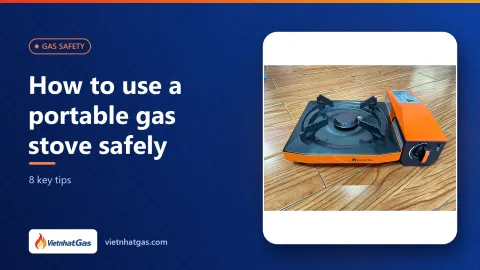
Eight tips for using a portable gas stove: fit the canister correctly, never cover the stove with a large grill plate, use it in a ventilated place, remove the canister after use.
Read articleTips on choosing a portable gas stove to suit your needs: power and flame control, safety features, materials, pot supports, windshield, carry case, compatible gas canisters, origin and warranty.
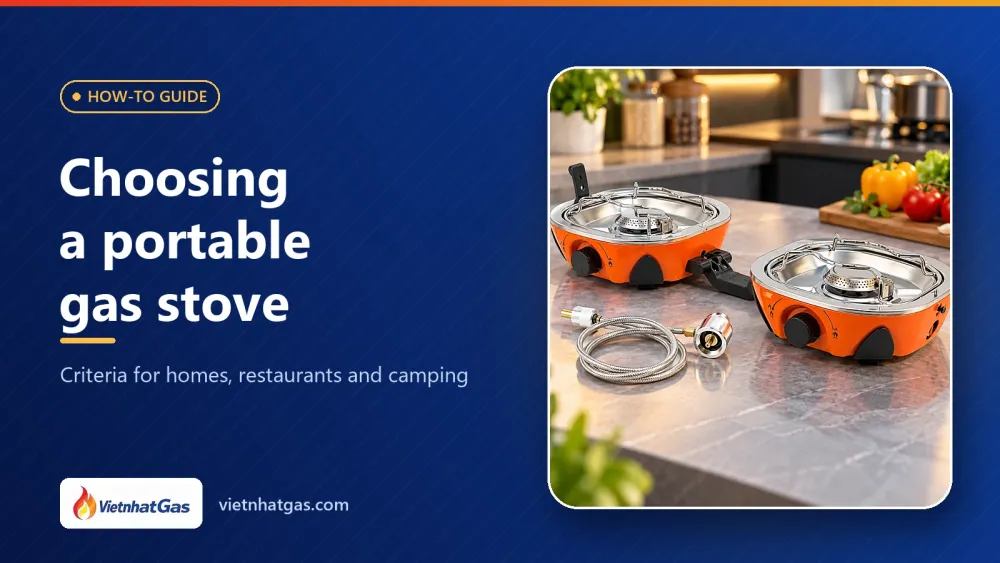
Portable gas stoves are found in most homes, hotpot restaurants, barbecue restaurants and camping backpacks. There are a great many models on the market, from cheap ones to those equipped with many safety features. When choosing a portable gas stove, do not look only at price and design; consider how you will use it, its power, its safety mechanisms, materials and warranty. Below are the specific criteria.
If your restaurant is deciding between a portable gas stove and an alcohol stove, see the comparison in alcohol stove or portable gas stove.
The power is usually shown on the stove body or the box, in kW or kcal/h. High power brings a large hotpot to the boil quickly but also uses more gas. Just as important is the control knob: the flame must turn down to a steady low level without going out. When looking at a stove, ask the seller to light it and turn the knob from high to low: a blue flame, even all round the burner, that does not flare or suddenly go out is a good sign. How long a gas canister lasts depends mainly on the power and flame level — see how long a butane canister lasts.
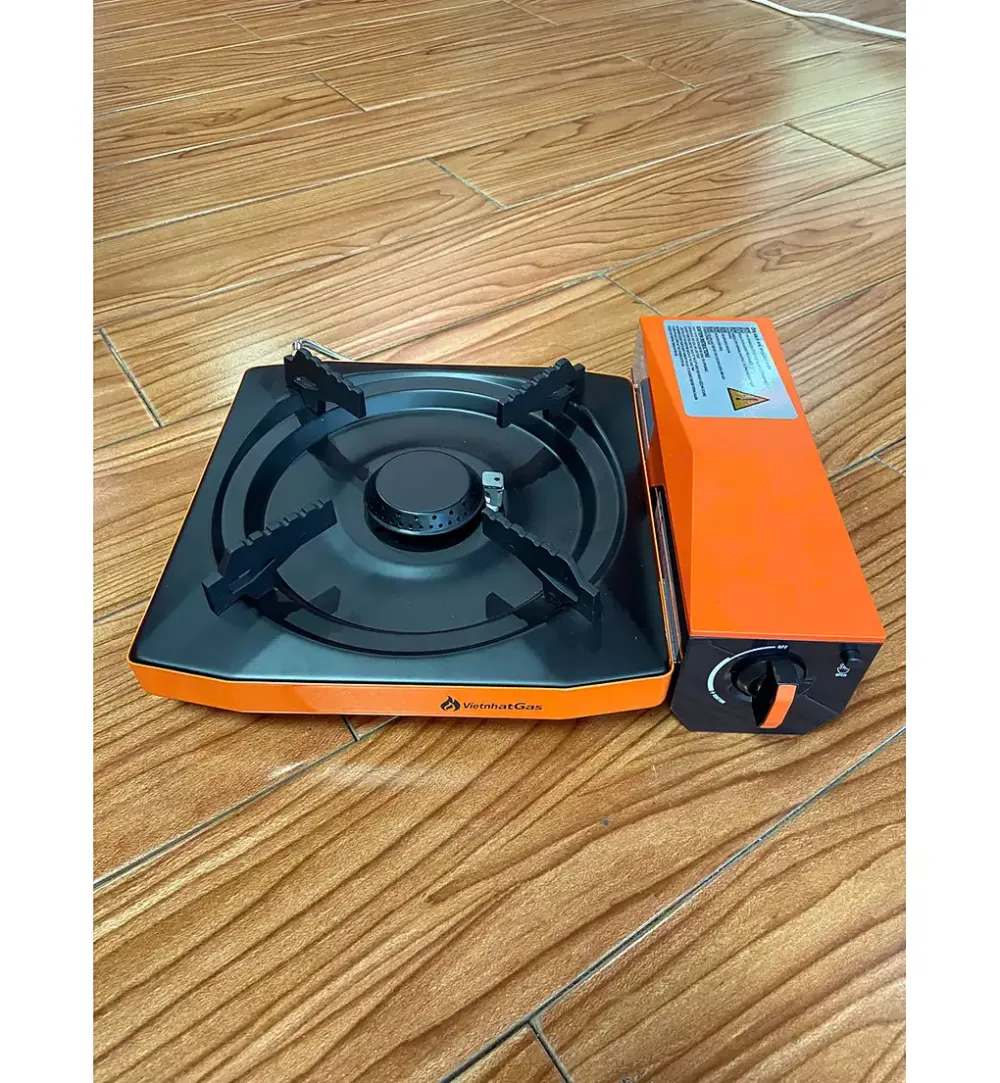
However good the features, the stove still needs to be used correctly — see how to use a portable gas stove safely.
If you are torn between a stove with a side-mounted canister and one that keeps the canister separate, our guide to portable gas stoves with a separate canister box compares the two designs and explains what to check on the hose and canister box before you buy.
If you live in a small, poorly ventilated rented room, our article on which gas stove suits a rented room suggests how to choose between a mini gas stove, a small gas cylinder and an induction hob based on space, landlord rules and cost.
Not necessarily. Cooking hotpot at the table usually needs a steady low flame more than a very strong one.
It is better to prioritise models with this mechanism, especially for restaurants; it is an additional layer of protection, not a substitute for correct use.
Use the same model throughout the restaurant, keep a few spare stoves, choose a supplier with consistent stock across orders, and immediately remove any stove with a damaged seal or a loose lever.
VietnhatGas supplies models such as the VNG/BG003 portable gas stove and the VNG/BG002 smart portable gas stove to dealers and restaurants; see more in our portable gas stoves category and send a request on our quotation page.
Written by the VietnhatGas technical and sales team — a batch manufacturer of LPG cylinders. This content is for reference; regulations and standards may change, so please check the current texts.
Eight tips for using a portable gas stove: fit the canister correctly, never cover the stove with a large grill plate, use it in a ventilated place, remove the canister after use.
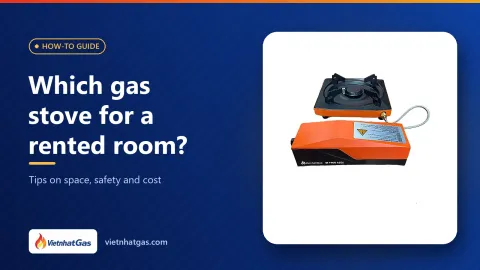
Read articleA rented room is cramped and poorly ventilated: should you choose a portable gas stove, a small gas cylinder or an induction hob? Criteria by room size, landlord rules and cost, safe stove layout and storing spare canisters.
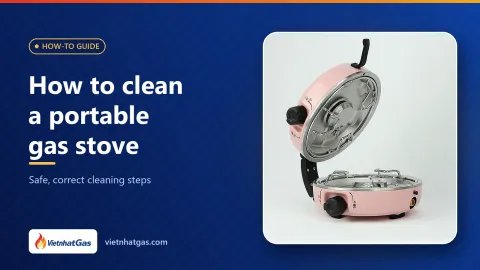
Read articleA step-by-step guide to cleaning a portable gas stove: remove the canister and let it cool, wipe it daily, clean the pot supports and drip tray, clear the burner ports, check the seal, spot damage and store the stove.
Read articleSend us the capacity, quantity and brand printing requirements — VietnhatGas will reply with a batch quotation.