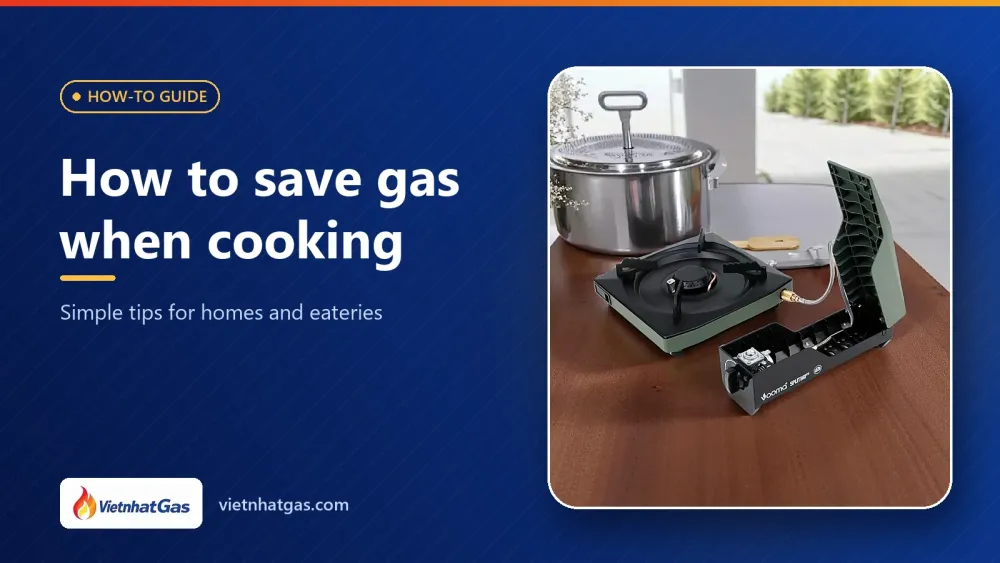
How to save gas when cooking: simple tips for homes and eateries
Easy ways to save gas when cooking: match the flame to the base of the pot, use a lid, use a pressure cooker, prepare before lighting the stove, clean the burners, check for leaks and choose suitable equipment for eateries.
VietnhatGas · · 4 min read
Gas is a regular expense for every household and an even bigger one for eateries and restaurants. Most wasted gas comes down to cooking habits; by adjusting just a few small things, you can save gas considerably while your food stays just as good and your kitchen becomes safer too. Below are practical tips you can start using straight away.
Match the flame to the base of the pot
A flame that spreads beyond the base of the pot only heats the surrounding air and the handles, and wastes gas. Adjust the flame so that its tips stay within the base of the pot. Once water is boiling, turn the flame down just enough to keep a gentle boil — a harder boil does not cook food any faster, it only evaporates more water.
A correct flame should be blue and steady. If the flame is yellow, red or burns unevenly, the stove is burning inefficiently — find out the causes in weak or red gas stove flame.
Use a lid and make the most of a pressure cooker
Put the lid on when heating, boiling or stewing: this keeps the heat in the pot, water boils faster and you can use a lower flame.
Use a pressure cooker for bone broths, beans and rice porridge: cooking time is much shorter than in an ordinary pot. Always use it according to the pot manufacturer’s instructions.
Use just enough water: heating extra water means burning extra gas.
Prepare thoroughly before lighting the stove
Finish preparing before lighting the flame: wash, chop, marinate and mix sauces first, then put the pot on the stove, so the stove is not burning with nothing on it while you look for things.
Thaw food in advance by moving it to the fridge the day before, instead of using the flame to thaw and cook at the same time.
Choose the right size of pots and pans
A pot that is too small on a large burner lets the flame wrap around the outside; a pot that is too large on a small burner takes a long time to boil. Choose pots with flat bases that sit well on the pan support and match the size of the burner.
Keep the stove clean and the system leak-free
Clean the burners regularly: spills and grease block the flame ports so the gas does not burn completely.
Check for leaks at the valve, hose and connections with soapy water, and never test with a flame — follow how to check for gas leaks at home. A leak is both dangerous and wasteful.
Close the cylinder valve when the stove will not be used for a long time.
Avoid draughts and make use of residual heat
Shield from wind sensibly: draughts push the flame sideways and lose heat. The kitchen needs good ventilation, but the stove should not be placed directly in the path of a fan or a strong draught — see where to place a gas cylinder at home.
Cook in batches, one dish after another: cook several dishes in a row while the stove and pots are still hot; boil vegetables and eggs in the same pot of water where possible.
Turn the stove off a little early for braised and stewed dishes, rice and boiled foods: keep the lid tightly on and the residual heat will finish the cooking.
Saving gas in eateries and restaurants
In commercial kitchens gas use is high, so equipment and layout matter more:
Use 45kg cylinders or a cylinder manifold when several stoves run at once, so the gas vaporises fast enough and the flame stays steady, reducing the problem of cold cylinders and weak flames that lengthen cooking time.
If you are opening a grill restaurant and torn between the two fuels, our article on gas or charcoal for a grill restaurant compares flavour, running costs, smoke and ventilation, as well as the safety risks of each option.
Frequently asked questions
Does a bigger flame cook faster and save more gas?
Not necessarily. Flame that goes beyond the base of the pot is mostly lost to the air. A flame that matches the base of the pot, combined with a lid, is usually more efficient.
Why does my gas cylinder run out unusually quickly?
It may be due to cooking habits, dirty burners, or a leak in the hose or connections. Check for leaks with soapy water; if you smell gas, close the valve, open doors for ventilation, do not switch electrical equipment on or off, and call your dealer from outside. To estimate how long a cylinder lasts, see how long a 12kg gas cylinder lasts.
Should I shake or warm a gas cylinder to use up the gas?
No. Never heat a gas cylinder with a flame, pour hot water over it or shake it hard. When the cylinder runs low, contact your dealer for a replacement.
VietnhatGas manufactures 12kg and 45kg LPG cylinders for dealers and filling plants and supplies portable gas stoves to retail chains. Send a request on our quotation page.
Written by the VietnhatGas technical and sales team — a batch manufacturer of LPG cylinders. This content is for reference; regulations and standards may change, so please check the current texts.
How to choose a reliable gas dealer for your home or restaurant: a clear address and brand, licences, cylinders still sealed and within their inspection date, weighing on delivery, transparent prices and warning signs to avoid.
Gas safety tips for families with young children and older people: put away lighters and mini gas canisters, lock stove knobs, position the cylinder, use a portable stove for hotpot, and teach children the smell of gas and emergency numbers.
How dealers can manage circulating LPG cylinders: record serial numbers, track cylinders held by customers, reduce losses, handle other brands’ cylinders and those due for inspection, and plan new cylinder purchases.
Read article →
Need a volume quote?
Send us the capacity, quantity and brand printing requirements — VietnhatGas will reply with a batch quotation.