Alcohol stove or portable gas stove: which should restaurants and families choose?
Is an alcohol stove or a portable gas stove the better fit? Compare flame strength, intended use, cost, safety and storage to choose the right stove for restaurants, buffets and the home.
VietnhatGas · · Updated · 5 min read
When preparing a hotpot meal, a buffet or table service at a restaurant, many people are unsure whether to use an alcohol stove or portable gas stove. Both are compact and easy to move, but they serve rather different purposes. Let us compare them so you can choose the right one.
What is an alcohol stove?
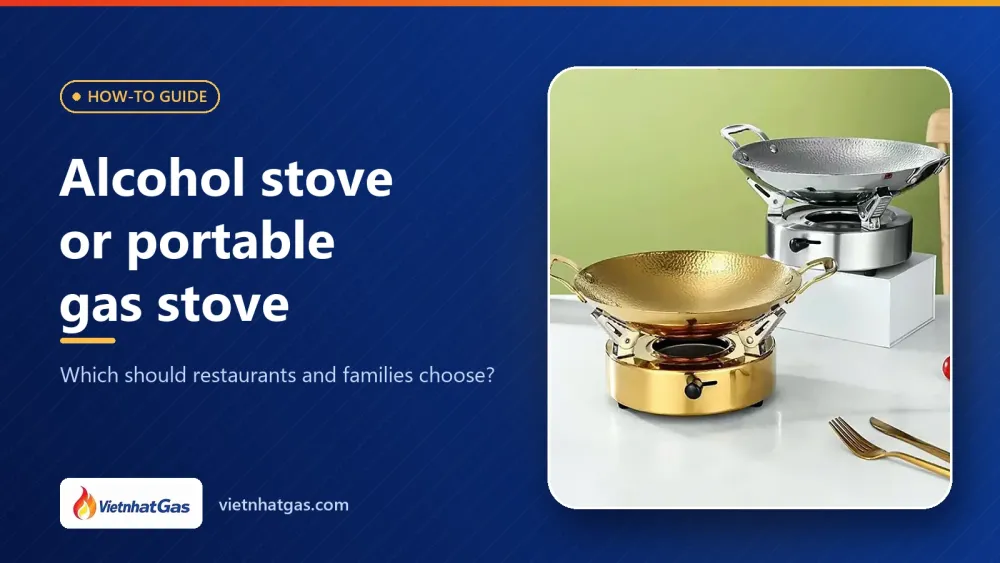
An alcohol stove burns solid alcohol fuel (dry fuel) or gel fuel, held in a cup or tray beneath the pot. The flame is small and steady, and cannot be turned up or down as easily as a gas stove. Alcohol stoves are usually used to keep warm a small hotpot, a buffet tray or food that has already been cooked. See the MS-001 alcohol stove.
What is a portable gas stove?
A portable gas stove (also called a camping gas stove) uses a butane canister, with a control knob to adjust the flame and ignition by turning the knob. The flame is strong and cooks quickly, making it suitable for cooking: hotpot, grilling, stir-frying, cooking noodles and boiling water. See the VNG/BG003 portable gas stove, which uses 220 – 250g butane mini gas canisters.
Alcohol stove vs portable gas stove compared
Criterion
Alcohol stove
Portable gas stove
Flame strength
Small, enough to keep food hot
Strong, adjustable
Main purpose
Keeping food warm, small hotpots
Cooking, hotpot, grilling
Size
Very compact, several can be placed on a table
Compact, but needs more space
Fuel
Solid alcohol fuel, gel fuel
Butane canister
Flame adjustment
Limited
Easy with the control knob
Alcohol stove or portable gas stove: which to choose?
Restaurants, hotpot restaurants: dishes that need to be cooked at the table (seafood hotpot, beef hotpot, grilled food) call for a portable gas stove, so the flame is strong and customers do not have to wait long. Dishes that are already cooked and only need keeping hot (single-portion mini hotpots, braised or stewed dishes) can use an alcohol stove.
Buffets, events, wedding receptions: an alcohol stove under a chafing tray is the familiar choice because it is compact and can be placed in many positions at once.
Families: a portable gas stove is more versatile — for hotpot and grilling at the table, and as a back-up during a power cut or when the gas cylinder runs out unexpectedly.
Picnics, camping: a portable gas stove can cook many dishes; an alcohol stove is light and compact if you only need simple reheating. Outdoors, shield the flame from the wind and keep it away from tents and dry grass.
Running costs
Do not look only at the purchase price of the stove; factor in the cost of fuel over your actual usage time. An alcohol stove usually has a low upfront cost, but each cup of fuel only burns for a certain length of time and is mainly for keeping food warm. A portable gas stove costs more upfront, and running costs depend on the number of gas canisters used according to flame level and cooking time — see how long a mini gas canister lasts.
Safety notes
With an alcohol stove:
Never add fuel while the stove is burning or still hot; wait until the flame is completely out and the stove has cooled before replacing the fuel. If you use liquid alcohol, do not overfill, and wipe up any spills before lighting.
An alcohol flame can be very hard to see in daylight; do not put your hand over the top of the stove to test it.
Place the stove on a flat, stable surface, away from tablecloths, paper and flammable items.
Put out the flame with a metal snuffer lid or the lid of the fuel can; do not blow it out or throw water on it.
With a portable gas stove:
Do not use pots, pans or grill plates so wide that they cover the whole stove and the canister compartment; do not wrap foil around the stove.
Do not let the gas canister get excessively hot; do not place two stoves close together.
Fit the canister correctly, turn the knob off when not in use and remove the canister after cooking.
For weddings and conferences that use alcohol burners to keep buffet dishes warm, our guide to planning buffet alcohol burners for events helps you position burners safely, estimate fuel, and put them out and clear them away properly afterwards.
Frequently asked questions
Can an alcohol stove bring a hotpot to the boil from cold?
It can with a very small pot, but it will take a long time to boil. The usual approach is to bring the hotpot to the boil in the kitchen and then place it on an alcohol stove to keep it hot at the table.
Can a portable gas stove be used in an enclosed room?
It is not advisable. Use it in a well-ventilated place; in a closed air-conditioned room, open a door or provide ventilation to avoid a lack of oxygen and a build-up of gases.
Should a restaurant use both types of stove?
Many restaurants use both: portable gas stoves for dishes cooked at the table and alcohol stoves for buffet trays and dishes kept warm.
VietnhatGas supplies alcohol stoves, portable gas stoves and butane mini gas canisters to restaurants and dealers; see also our range of other stoves or the mini gas business model. Send a request on our quotation page.
Written by the VietnhatGas technical and sales team — a batch manufacturer of LPG cylinders. This content is for reference; regulations and standards may change, so please check the current texts.
Gel fuel and solid fuel differ in form, how they burn, how the flame is put out and what they suit best. How to choose products with clear labelling, use them safely and store them correctly.
A guide for hotpot restaurant owners to work out the number of stoves per table, estimate daily mini gas canister use, set a safe stock level and ordering rhythm, change canisters mid-shift and set routines for staff.
Practical tips for shops and dealers selling mini gas: customer groups, seasons, choosing a supplier, safe display and selling portable stoves and lighters alongside.
Read article →
Need a volume quote?
Send us the capacity, quantity and brand printing requirements — VietnhatGas will reply with a batch quotation.