Alcohol burners for buffets: layout, fuel planning and safety at events
Planning alcohol burners for buffets at weddings and conferences: how many burners each food line needs, safe layout, assigning staff to watch them, estimating fuel, putting out the flames and clearing up afterwards.
VietnhatGas · · 4 min read
Weddings and conferences often have dozens of food trays that must be kept hot for several hours. Placing alcohol burners for buffets under chafing dishes is a familiar solution, but once the number of burners runs into the dozens, the layout, staffing and fuel need to be planned separately.
Working out the number of burners for each food line
By tray and by pot: every soup pot or hotpot needs its own burner; a long chafing dish may need several burners, depending on the stand design and the manufacturer’s instructions.
Keep cold dishes separate: salads, desserts and fruit do not need burners and should be set out separately so the line with flames is more compact.
Have spares: a few extra burners, snuffer lids and stands in case a burner fails or dishes are added during the event.
Check before the day: every set of trays, stands, alcohol burners and snuffer lids should be complete, not warped and sit snugly together.
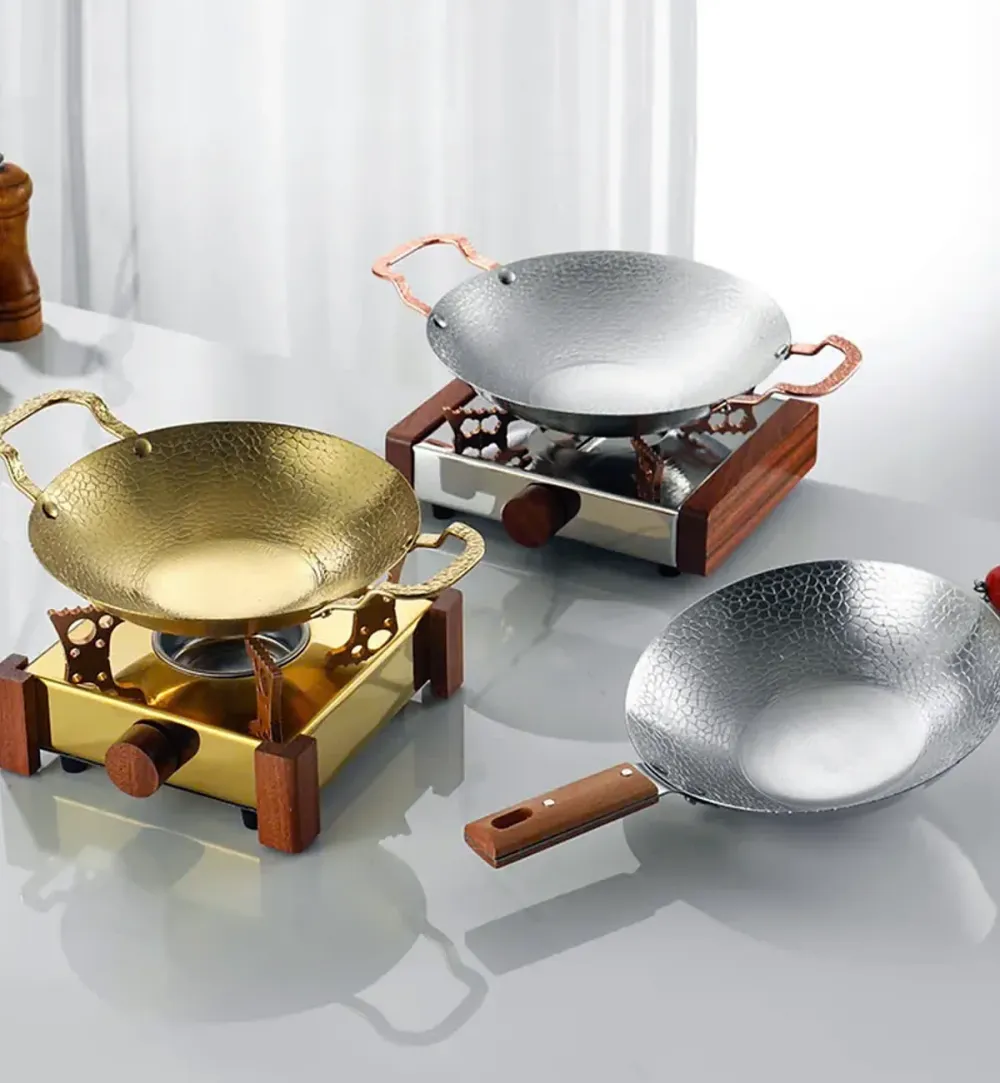
For liquid dishes such as hotpot and soup, each pot needs its own alcohol burner set firmly on a stand.
Laying out the buffet line and safe distances
A flat, sturdy table; do not prop burners up on cardboard boxes.
Away from decorations: paper flowers, dried flowers, fabric bows, balloons, stage backdrops, decorative candles.
Tablecloths and table skirts pinned neatly, not hanging close to the flame.
Guest flow: leave a wide aisle in front of the food line; put plates and spoons at the start of the line so guests do not reach across trays with flames under them.
Avoid direct draughts from fans or air-conditioning vents, which make the flame lean, go out or blow outwards; closed rooms still need ventilation.
Assign one person to be in charge
Give one person, or one person per food line, responsibility for the alcohol burners: lighting them, monitoring them, changing the fuel and putting out the flames. This person can see the whole line they look after and knows where the fire extinguisher and the exits are; nobody else lights or moves burners on their own initiative.
Estimating fuel for the whole event
The burn time of each can of gel fuel or tablet of solid fuel depends on the product and the wind, so there is no single figure that applies to all. To estimate:
Read the burn time on the packaging of the fuel you will use; if possible, burn one unit as a test in conditions similar to the venue.
Work out how long the food needs to be kept hot: from when the dishes are set out until service ends.
Divide the time the food needs to be kept hot by the burn time of one unit and round up: that is the amount of fuel per burner.
Multiply by the total number of burners and add a reserve.
Only change the fuel once the burner is fully out and has cooled; never add fuel to a burner that is alight or still hot. While you wait, put the lid on the tray to keep the heat in.
Put the flame out with a lid; do not blow on it or throw water on it. Alcohol flames are hard to see under bright lights, so only treat a burner as out once the lid is on.
Do not lift or move trays or burners that are alight.
Count the burners that were lit to make sure none is still smouldering; wait until they are completely cool before clearing up.
Close gel fuel cans that still contain fuel tightly and keep them separate; do not put empty cans in with paper napkins or flammable rubbish.
Clean and dry the burners, stands and trays before packing them into boxes; store fuel in a dry, well-ventilated place away from heat sources.
Frequently asked questions
Should alcohol burners for buffets be lit well before the event starts?
No. Only light them once the food is out and someone is on duty; lighting them too early wastes fuel and dries the food out.
Can alcohol burners be used at outdoor events?
Yes, if they are shielded from the wind and placed away from dry grass, tents, marquees and decorations; wind uses up more fuel, so prepare extra.
How many alcohol burners can one person look after?
It depends on the layout; what matters is that the person in charge can see their whole line of burners and reach it in time if something goes wrong.
VietnhatGas supplies alcohol burners to wedding venues, catering services and dealers. See the MS-001 alcohol stove, our other stoves category or send the quantity you need on our quotation page.
Written by the VietnhatGas technical and sales team — a batch manufacturer of LPG cylinders. This content is for reference; regulations and standards may change, so please check the current texts.
Gel fuel and solid fuel differ in form, how they burn, how the flame is put out and what they suit best. How to choose products with clear labelling, use them safely and store them correctly.
LPG for industrial kitchens in factories, schools and hospitals: how to estimate gas use, 45kg cylinder manifolds or bulk tanks, contracts with dealers, safety equipment, maintenance and staff training.
Is an alcohol stove or a portable gas stove the better fit? Compare flame strength, intended use, cost, safety and storage to choose the right stove for restaurants, buffets and the home.
Read article →
Need a volume quote?
Send us the capacity, quantity and brand printing requirements — VietnhatGas will reply with a batch quotation.