Gel fuel vs solid fuel: how do they differ? Choosing and using them safely
Gel fuel and solid fuel differ in form, how they burn, how the flame is put out and what they suit best. How to choose products with clear labelling, use them safely and store them correctly.
VietnhatGas · · Updated · 4 min read
At buffets, with small hotpots or on picnics, alcohol stoves usually burn one of two familiar fuels. Many people simply call both “alcohol”, but gel fuel vs solid fuel is a real distinction: they differ in form, in the way they burn and in how they are used. Understanding them helps you choose the right one and use it more safely.
What is gel fuel?
Gel fuel is a thick, gel-like fuel, usually supplied ready in a can or a cup with a lid. To use it, open the lid, place the can in the tray of the alcohol stove and light it directly at the mouth of the can. It burns quietly and evenly, making it suitable for keeping food hot throughout a meal.
Advantages: simple to use; the flame is put out by putting the lid back on the can; what is left can be sealed and used again if the product instructions allow.
Drawbacks: the cans take up space when travelling; the flame is hard to see in bright light.
What is solid fuel?
Solid fuel (solid alcohol fuel) is pressed into tablets, bars or blocks and packed in blister packs or boxes. To use it, place a tablet on the heat-resistant tray or dish of the stove and light it; the tablet burns down gradually until it is used up.
Advantages: compact, light, easy to portion and convenient to carry on picnics.
Drawbacks: the flame is hard to adjust; to put it out early you must cover it with a metal lid or a dedicated tool; depending on the product, it may give off an odour or soot.
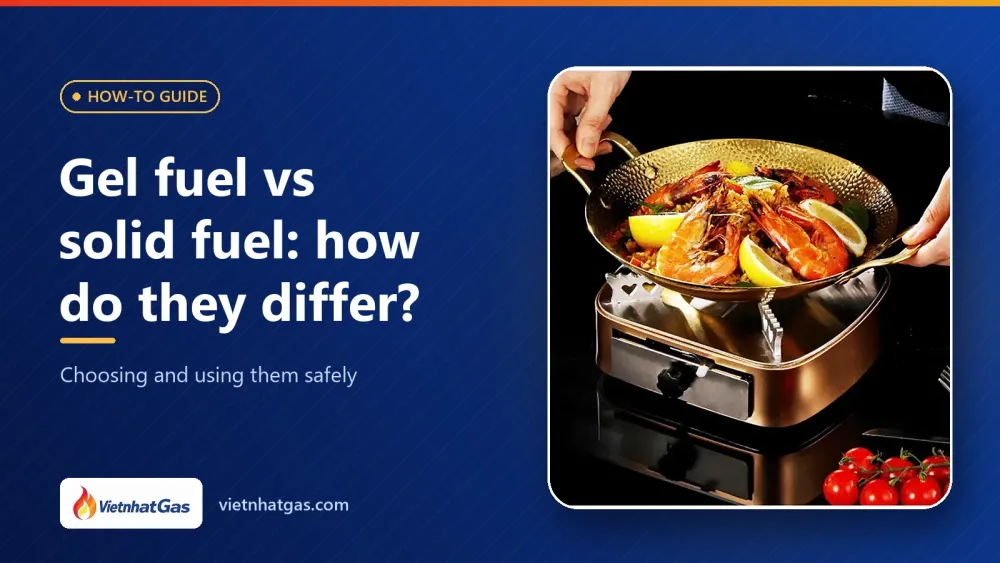
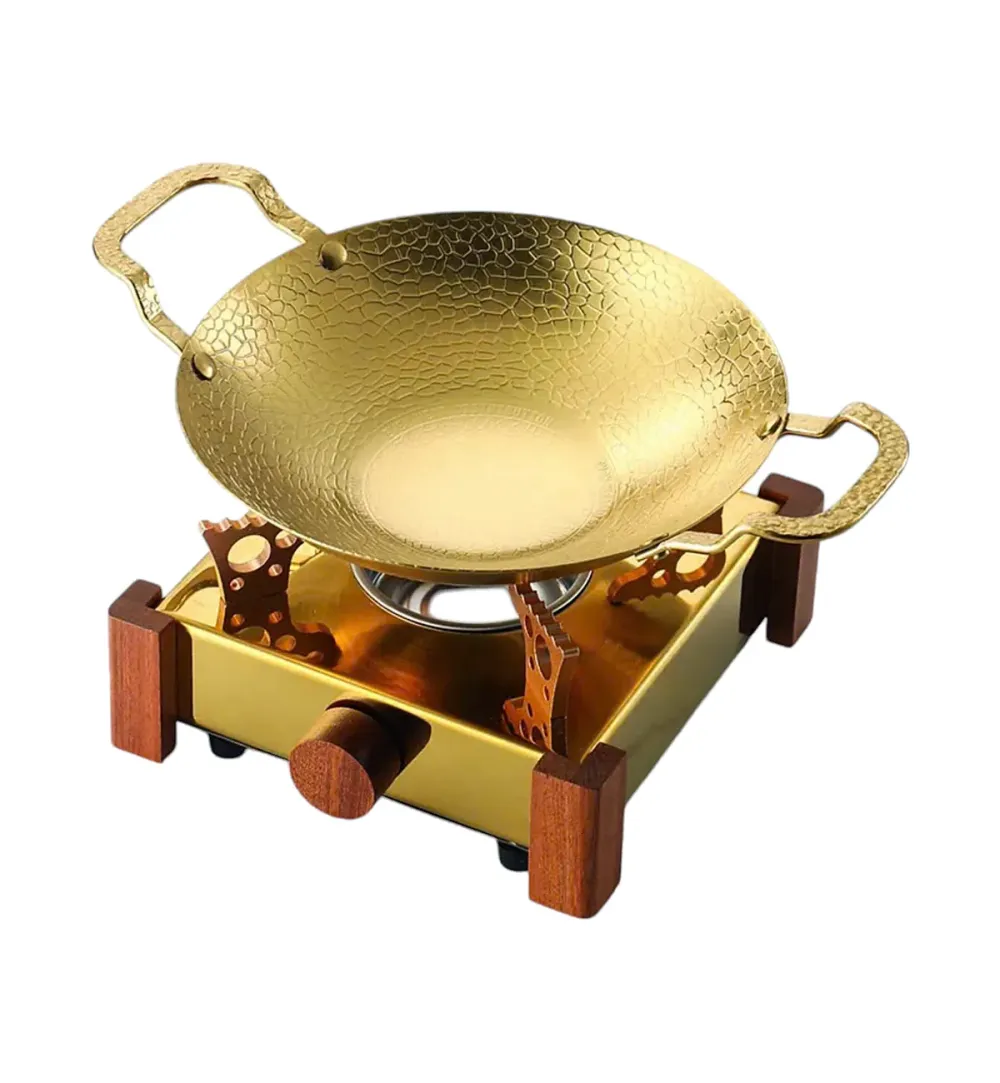
An alcohol stove beneath a small hotpot pan keeps food hot right at the table.
Gel fuel vs solid fuel compared
Criterion
Gel fuel
Solid fuel
Form
Thick gel in a can or cup with a lid
Solid tablets, bars or blocks
How to use
Open the lid and light at the mouth of the can
Place on a heat-resistant tray and light
Putting out the flame
Put the lid back on the can
Cover with a metal lid or let it burn out
Best for
Keeping buffets and table hotpots hot
Picnics, reheating, cooking small amounts
Burn time depends on the product, the amount of fuel and the wind; check the information on the packaging.
Which should you choose?
Restaurants, buffets: gel fuel is convenient because a can is placed ready under each chafing tray, lights and goes out quickly, and spills little.
Table hotpots at home: both work with an alcohol stove that has a suitable tray; gel fuel is easier for people who rarely use one. If you use the MS-001 alcohol stove, choose the fuel type listed in the stove’s specifications.
Picnics: solid fuel is compact and light; remember to shield it from the wind and place the stove on a non-flammable surface.
When you need to cook food through over a strong flame: a portable gas stove such as the VNG/BG003 is more suitable.
Choose products with clear labelling
The composition of gel fuel and solid fuel varies by manufacturer, affecting odour, smoke, soot and how steady the flame is. When buying, choose products that:
Show the name and address of the manufacturer or the organisation responsible, and a clear origin.
Show the production date, use-by date, instructions for use and safety warnings.
Come in sealed packaging, with cans that are not bulging or leaking and tablets that are not crumbling or giving off liquid.
Safe use and storage
The two most important rules: never add fuel while the stove is burning or still hot, and put the flame out with a lid — do not blow on it or throw water on it. Alcohol flames are very hard to see in daylight, so always treat the stove as alight until the lid is on; use the stove in a well-ventilated place. For other points on placing and using an alcohol stove, see alcohol stove or portable gas stove.
For storage: close gel fuel cans tightly after use and keep solid fuel in its original packaging; store in a dry, well-ventilated place away from heat sources and out of the reach of children.
If you use gel or solid fuel to keep dishes warm at a function, our article on alcohol burners for buffets: layout and safety at events explains how to work out the number of burners per food line, estimate fuel and assign staff to watch them.
Frequently asked questions
Can gel fuel be reused after the flame has been put out?
Usually yes, if there is fuel left in the can: wait for the can to cool, close the lid tightly and use it next time, following the instructions on the packaging.
Can solid fuel be used in a hotpot alcohol stove?
Yes, if the stove has a heat-resistant tray or dish to hold the tablets. For stoves designed for gel fuel cans, use the type of fuel recommended by the stove manufacturer.
Why does the burning fuel give off a pungent smell or black soot?
It depends on the composition of each product and how well ventilated the area around the stove is. If the smell is pungent or there is a lot of smoke, stop using it, ventilate the area and switch to a product of clear origin.
VietnhatGas supplies alcohol stoves and other small stoves to restaurants, dealers and shops. See our alcohol stoves and other stoves category or send a request on our quotation page.
Written by the VietnhatGas technical and sales team — a batch manufacturer of LPG cylinders. This content is for reference; regulations and standards may change, so please check the current texts.
Gas and charcoal compared for grill restaurants: flavour, smoke and ventilation, running costs, speed of service, the risks of carbon monoxide and gas leaks, cleanliness, rules in residential areas and hybrid set-ups.
A rented room is cramped and poorly ventilated: should you choose a portable gas stove, a small gas cylinder or an induction hob? Criteria by room size, landlord rules and cost, safe stove layout and storing spare canisters.
A step-by-step guide to cleaning a portable gas stove: remove the canister and let it cool, wipe it daily, clean the pot supports and drip tray, clear the burner ports, check the seal, spot damage and store the stove.
Read article →
Need a volume quote?
Send us the capacity, quantity and brand printing requirements — VietnhatGas will reply with a batch quotation.