Portable gas stove for camping: choosing and using it safely
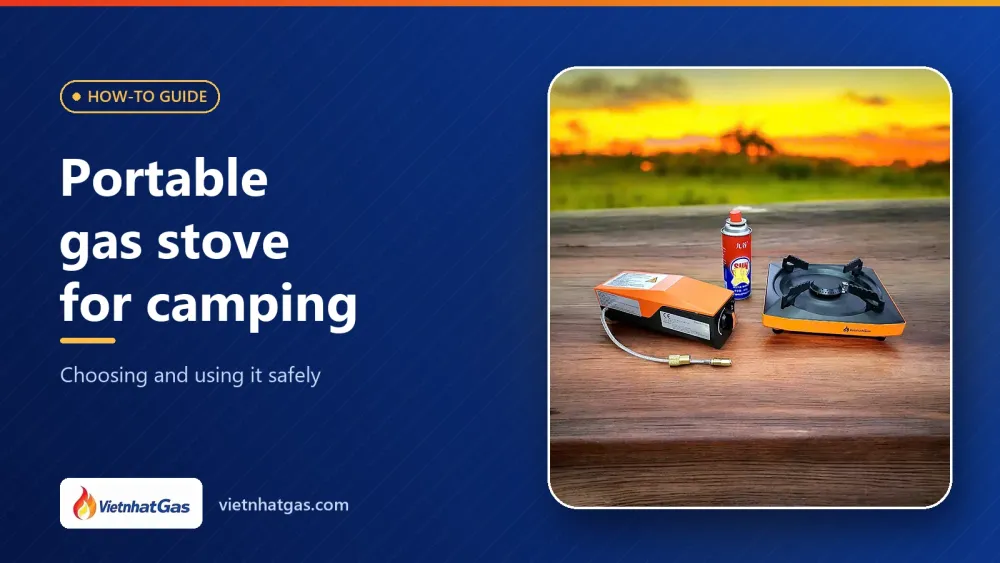
Tips for using a portable gas stove for camping: choose a stove with a carry case and windshield, work out how many canisters to bring, carry them safely, position the stove, cook in cold weather and why never to use it inside a closed tent.
VietnhatGas · · 4 min read
A hot hotpot or a pot of tea by a stream is one of the pleasures of a camping trip. A portable gas stove for camping is compact, light and quick to light, so many people choose one. However, cooking outdoors has its own risks: strong wind, uneven ground, changing temperatures and the enclosed space of a tent. This article brings together tips on choosing a stove, preparing gas and using it safely.
Choosing a portable gas stove for your trip
A box or carry case: protects the stove in transit, preventing knocks that bend the locking lever or push the ignition electrode out of position.
A windshield or a burner design that reduces the effect of wind.
Sturdy pan supports and a stable base, suited to the pots and pans you plan to bring.
Safety mechanism: prefer stoves with a valve that cuts off automatically when the pressure in the canister rises.
Size and weight suited to the number of people and your means of transport.
The number of canisters depends on the number of meals, the dishes (hotpot and grilling use more gas than boiling water), the flame level and the weather. To estimate how long each canister lasts, see how long a butane canister lasts. Bring one spare canister, as cold weather or strong wind increases gas consumption.
Carrying and storing gas canisters in the car
Keep gas canisters in a closed box, upright and firmly secured so they do not roll or knock about.
Remove the canister from the stove while travelling.
Never leave gas canisters in a closed car in the sun: the temperature inside the car rises very high, increasing the pressure in the canister, with a risk of deformation, leaks or explosion.
At the campsite, do not leave canisters near heat sources or flames, or in direct sunlight.
Choose a flat, solid surface such as a folding table or a flat rock; do not place it on dry grass, dry leaves or soft sand.
Keep a safe distance from tents, fabric chairs, sleeping bags and flammable items.
Shield it from wind with the stove’s windshield or place it on the sheltered side, but do not enclose the stove completely and do not let anything cover the canister compartment, as trapped heat can make the canister hot.
Do not use pots or grill plates that are too large for the stove.
Always have someone watching the stove; keep children and pets away from the cooking area.
Never use the stove inside a closed tent
Even when it is raining or cold, never cook or heat with a gas stove inside a tent, a vehicle or any enclosed space. Burning gas consumes oxygen and can produce colourless, odourless CO, which causes poisoning when it builds up, especially during sleep. Tent fabric also catches fire very easily. Cook in a well-ventilated area outside the tent; if it rains, use a shelter that is open on the sides, away from sleeping tents.
Cooking in cold weather
Butane vaporises poorly at low temperatures, so a portable gas stove for camping often gives a weak flame in high mountains, at night or early in the morning — see what is butane. A few tips:
Keep gas canisters in an insulated bag or in a rucksack somewhere moderately warm before use.
Change the canister when the flame stays weak instead of struggling on.
Do not warm the canister over a flame or place it right next to the stove to warm it up.
Packing up after the trip
Turn off the stove, let it cool, remove the canister and pack it into the box.
Bring all empty gas canisters home and dispose of them in the proper place; do not burn or puncture them.
Clean the stove and dry it before storing so it lights well next time. If the stove has problems, see portable gas stove won’t light.
If you use a mini gas stove to sell food from a cart rather than for camping, our article on gas for mobile food stalls offers advice on choosing a gas source, keeping out of the sun, storing spare canisters and checking everything before trading each day.
Frequently asked questions
Can I use a portable gas stove in a tent if the door is open?
It is not advisable. Tents are small, the fabric is flammable and CO can still build up. Cook in a well-ventilated area outside.
Why does a portable gas stove for camping have a weak flame at night?
Lower temperatures make butane vaporise more slowly and the pressure in the canister drops. Keep canisters somewhere moderately warm and bring spares.
Can a part-used gas canister be taken home and used again?
Yes, if the canister is not dented, rusty or leaking. Store it in a dry, cool, well-ventilated place away from heat sources, with the protective cap on the canister head.
Written by the VietnhatGas technical and sales team — a batch manufacturer of LPG cylinders. This content is for reference; regulations and standards may change, so please check the current texts.
A step-by-step guide to cleaning a portable gas stove: remove the canister and let it cool, wipe it daily, clean the pot supports and drip tray, clear the burner ports, check the seal, spot damage and store the stove.
Eight tips for using a portable gas stove: fit the canister correctly, never cover the stove with a large grill plate, use it in a ventilated place, remove the canister after use.
Gas and charcoal compared for grill restaurants: flavour, smoke and ventilation, running costs, speed of service, the risks of carbon monoxide and gas leaks, cleanliness, rules in residential areas and hybrid set-ups.
Read article →
Need a volume quote?
Send us the capacity, quantity and brand printing requirements — VietnhatGas will reply with a batch quotation.