Gas regulator: what it does, how to choose one, signs of failure and when to replace it
A gas regulator keeps the pressure to the stove steady. The difference between low-pressure household regulators and industrial regulators for wok burners, how to match the cylinder valve type, signs of failure and how to replace one safely.
VietnhatGas · · 4 min read
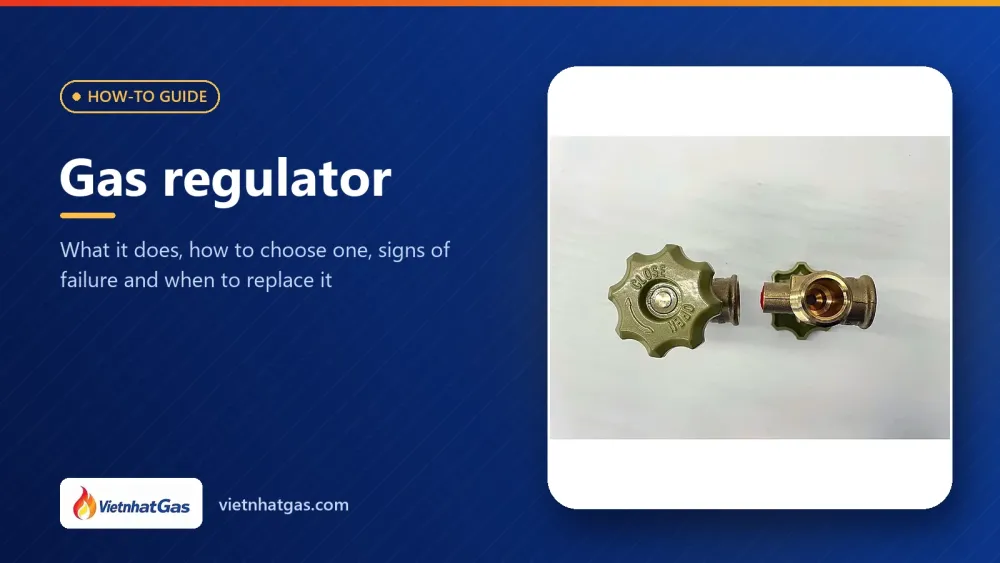
Between the gas cylinder and the stove there is always a small part that is crucial to safety: the gas regulator. It reduces the pressure of the gas in the cylinder to a low, steady level that the stove can use. Choosing the wrong type or using a faulty regulator can cause a weak flame, flare-ups or leaks. This article explains what a regulator does, how to choose one, the signs of failure and when to replace it.
What does a gas regulator do?
Inside the cylinder, LPG is stored as a liquid under pressure, and this pressure varies with the ambient temperature. A gas stove, however, needs a low-pressure, steady flow of gas for an even flame. The regulator (also called a pressure-reducing valve) has a diaphragm and a spring inside that adjust automatically to keep the outlet pressure steady even as conditions in the cylinder change. Find out more in what is LPG.
Types of regulator
Low-pressure regulators for household stoves
Used for household gas stoves (double-burner, built-in and freestanding hobs), with a low outlet pressure; this is the most common type and usually comes with a 12kg cylinder.
High-pressure (industrial) regulators for wok burners and restaurant stoves
Wok burners and high-flame stir-fry stoves need a higher flow rate and pressure, so they use an industrial regulator, which often has a pressure adjustment knob or a gauge. Do not fit a high-pressure regulator to a household stove, as the flame may flare up strongly; conversely, a household regulator fitted to a wok burner gives a weak flame. See also gas wok burners for restaurants.
How to choose the right gas regulator
Match the cylinder valve type: a screw-thread cylinder valve needs a regulator with the matching thread; a clip-on cylinder valve needs a clip-on regulator of the same standard — see the difference between POL and QCC valves. Do not use home-made adaptors.
Match the type of stove: low pressure for household stoves, high pressure for commercial stoves, following the stove maker’s instructions.
Clear origin: the manufacturer’s name and the outlet pressure and flow rate are printed or stamped on the body of the regulator; it comes with instructions for use and a warranty label.
A reputable place to buy: gas dealers and authorised shops; avoid untraceable products at unusually low prices.
Signs of a faulty regulator
A faint hissing sound at the regulator when the cylinder is open but the stove has not been turned on.
A weak, flickering flame that keeps rising and falling even though there is plenty of gas left in the cylinder — see weak or red flames on a gas stove.
Unusual condensation or frost on the regulator when you are only cooking at a normal level.
A cracked body, a worn thread, a loose lever or a hardened washer.
Note: a weak flame can also be caused by the gas running low, a dirty burner or a kinked hose; it is best to ask your dealer to identify the real cause.
When and how to replace a regulator
A regulator contains a diaphragm, washers and a spring, and these parts age with use. Replace it as recommended by the manufacturer in the instructions for use, or straight away when you notice any of the signs of damage listed above.
Turn off the stove and close the cylinder valve.
Remove the old regulator by hand, following the manufacturer’s instructions.
Fit a new regulator of the right type, connect the hose and tighten the clamp; while you are at it, check the gas hose too.
Open the cylinder valve and test every joint for leaks with soapy water before turning on the stove.
The removal and fitting sequence is similar to changing a gas cylinder at home. Do not dismantle or repair a regulator yourself: adjusting the spring or fitting a home-made diaphragm can both give the wrong outlet pressure, which is dangerous.
A regulator must match the cylinder and the stove you are using; our guide to industrial versus household gas and who should use which helps you understand the differences in cylinders, regulators and installation requirements before you buy.
Frequently asked questions
How long does a gas regulator last before it needs replacing?
There is no single figure for every type; its service life depends on the quality of the regulator and the conditions of use. Follow the manufacturer’s recommendations and replace it early if you notice signs of damage.
Does a gas regulator shut off the gas automatically if there is a leak?
Some types have a mechanism that shuts off when the gas flow rises abnormally, but not every type has one, and this mechanism does not detect every kind of leak. You still need to check for leaks regularly.
Can I use a wok burner regulator on a household stove?
No. An industrial regulator has a higher outlet pressure, and fitting one to a household stove can easily cause the flame to flare up.
VietnhatGas manufactures the LPG cylinder handwheel valve — the valve fitted on the cylinder, which the regulator connects to — as well as LPG cylinders for dealers and filling plants. Need a source of matching cylinder valves and cylinders? Send a request on our quotation page.
Written by the VietnhatGas technical and sales team — a batch manufacturer of LPG cylinders. This content is for reference; regulations and standards may change, so please check the current texts.
A gas leak detector helps detect a build-up of gas early. The common types, why it must be installed low near the floor for LPG, how to test and maintain it, and what to do when it goes off.
The gas hose is a common place for leaks. Learn about the types of hose, signs of ageing, how to tighten the clamps, choosing the length, routing the hose away from heat and checking for leaks after replacing it.
A guide on how to change a gas cylinder at home safely: preparation, closing the valve, removing and fitting the regulator, checking the new cylinder, testing for leaks with soapy water, what not to do and when to call your dealer.
Read article →
Need a volume quote?
Send us the capacity, quantity and brand printing requirements — VietnhatGas will reply with a batch quotation.