What is a torch lighter used for? Uses and safety notes
A torch lighter gives a focused flame that the wind rarely blows out. Its uses in the kitchen, for lighting charcoal and when camping; what not to do, the safety lock, refilling and storage.
VietnhatGas · · Updated · 4 min read
Unlike an ordinary lighter, which gives a soft yellow flame that goes out easily, a torch lighter produces a small, focused blue jet flame that is rarely blown out by the wind. That is why this type of lighter is widely used in the kitchen, for charcoal grilling, on camping trips and for small jobs that need concentrated heat. Below are its common uses and the things you should not do with it.
What is a torch lighter?
It is a gas lighter with a burner jet that mixes gas with air before combustion, producing a jet-type flame. The flame is hot and compact and travels straight out from the jet, so the wind has difficulty deflecting or blowing it out. Most mainstream models use butane gas, have push-button ignition and a knob to adjust the flame length; many have a safety lock and a refill valve. Compared with an ordinary-flame lighter, a torch lighter usually uses more gas when kept alight for a long time, so it suits short tasks.
Uses in the kitchen
Caramelising sugar on top of crème caramel, crème brûlée and tarts.
Searing the surface of cooked meat and fish to add colour and aroma.
Melting cheese toppings, and charring the skins of peppers and tomatoes so they peel easily.
Lighting a stove that burns wood or charcoal. With a gas stove, only light it by hand if the stove’s instructions allow it; a portable gas stove with a broken igniter should be repaired or taken in under warranty — see portable gas stove will not light.
A torch flame only sears or melts the surface; it cannot replace cooking food through.
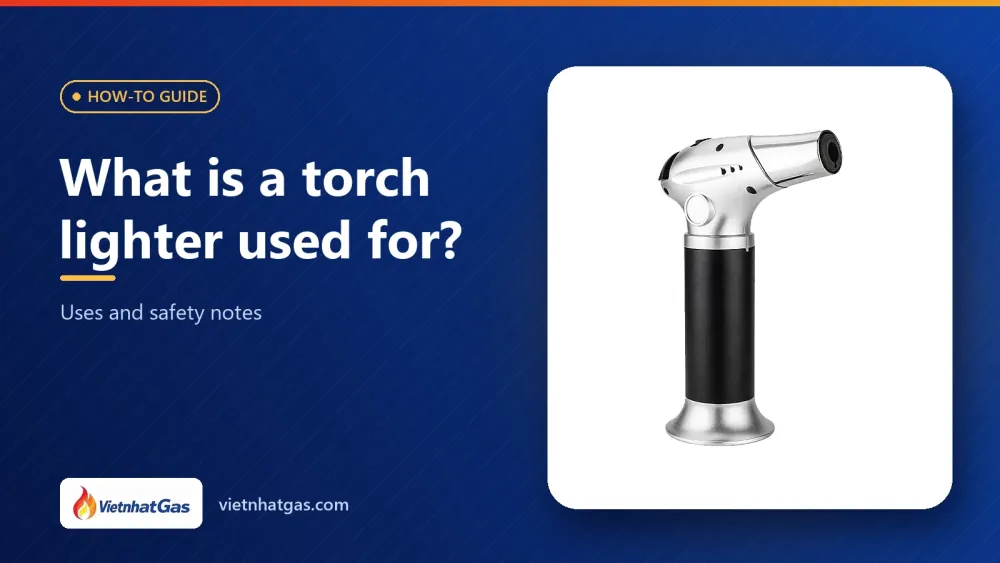
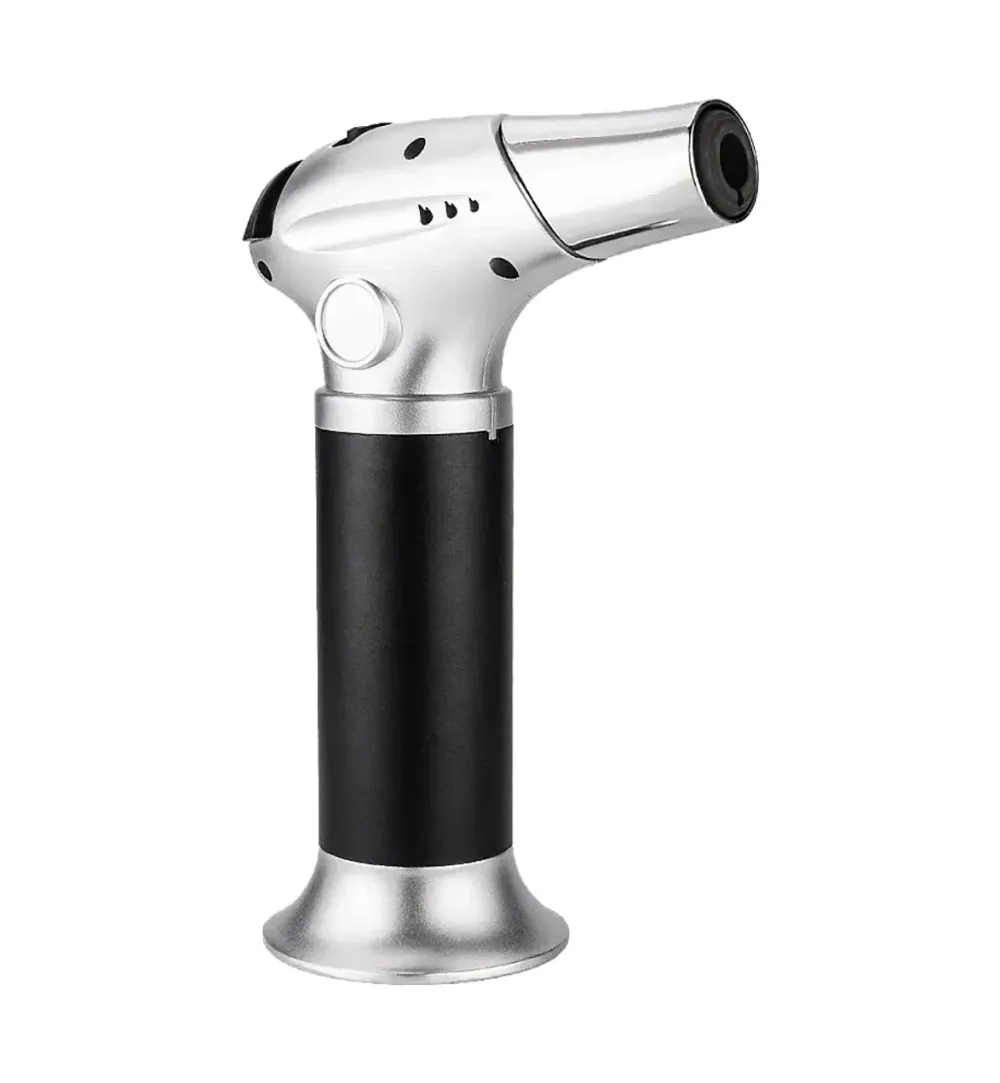
A tabletop torch lighter stands firmly on its round base, and the nozzle directs the flame onto a single point.
Lighting charcoal, BBQs and outdoor use
Lighting charcoal for grilling: the focused flame helps light firelighters or small pieces of charcoal faster. Do not hold the lighter close to charcoal that has just been doused with lighter fluid; light it from a safe distance.
Lighting outdoor stoves: lighting wood stoves and camping stoves in windy conditions; do not light campfires in strong wind or where fires are prohibited.
Picnics: wind by the coast or in the mountains easily blows out an ordinary flame; a torch flame is less affected. For tips on choosing a stove and gas canisters for trips, see portable gas stoves for picnics and camping.
Other small jobs: sealing the ends of paracord and synthetic rope so they do not fray; lighting candles and incense in windy places.
What a torch lighter must not be used for
Never heat a gas canister or gas cylinder in any way, even when cold weather makes the stove flame weak. Heating the gas raises the pressure and can cause an explosion.
Do not use it near flammable materials: petrol and oil, paint, alcohol, aerosol cans, curtains, paper, dry leaves.
Do not use it in place of industrial welding or torching tools: hand-held lighters are not designed to stay alight continuously for long; the body and jet will get hot, which can burn your hand or damage the lighter.
Whether it is a torch lighter or an ordinary one, store it out of children’s reach after use; our article on child-resistant lighters: mechanism and use explains why a safety lock only helps and cannot replace adult supervision.
Frequently asked questions
Can a torch flame cook food?
It is not suitable. The flame only sears or melts the surface; food needs to be cooked on a stove before torching.
Why is the torch flame weak or turning yellow?
Usually because the gas is running out, the lighter is cold, the adjuster is set low or the burner jet is dirty. Refill it and wait for the lighter to return to normal temperature; if it is still weak, stop using it.
Can a torch lighter be used indoors?
Yes, for short tasks such as torching desserts or lighting a stove (for a gas stove, only if its instructions allow it), in a well-ventilated place away from flammable materials. Do not use it in a closed room that smells of gas or solvent fumes.
VietnhatGas supplies a range of gas lighters to dealers, shops and businesses. See our gas lighters category and the VNG/BL-001 model; if you sell at retail, also read selling gas lighters, then send a request on our quotation page.
Written by the VietnhatGas technical and sales team — a batch manufacturer of LPG cylinders. This content is for reference; regulations and standards may change, so please check the current texts.
How to refill a gas lighter correctly: telling whether a lighter is refillable, choosing the right gas and nozzle, the safe refilling steps, what to do if it will not light and the mistakes to avoid.
How child-resistant lighters work: a firmer press, a lock button, a two-step action. How to use them correctly, why they cannot replace supervision, and how to choose and store them.
Gel fuel and solid fuel differ in form, how they burn, how the flame is put out and what they suit best. How to choose products with clear labelling, use them safely and store them correctly.
Read article →
Need a volume quote?
Send us the capacity, quantity and brand printing requirements — VietnhatGas will reply with a batch quotation.