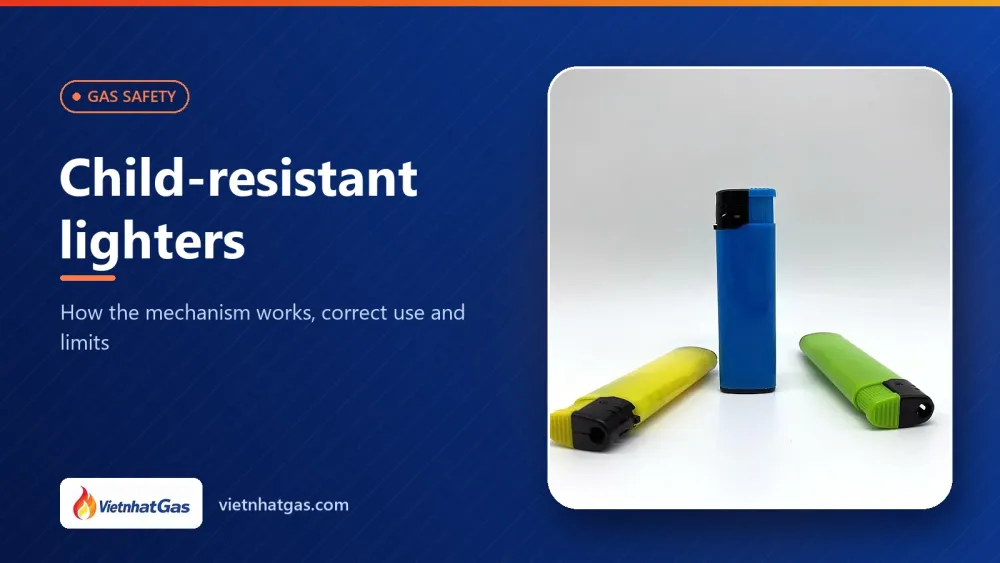
Child-resistant lighters: how the mechanism works, correct use and limits
How child-resistant lighters work: a firmer press, a lock button, a two-step action. How to use them correctly, why they cannot replace supervision, and how to choose and store them.
VietnhatGas · · 3 min read
Young children copy adults very quickly, and a lighter left on the table can become a dangerous toy. Child-resistant lighters, also known as lighters with a safety lock, are designed to make it harder for young children to produce a flame. Below are the types of mechanism, how to use them correctly and the limits you need to understand.
How does the child-resistant mechanism work?
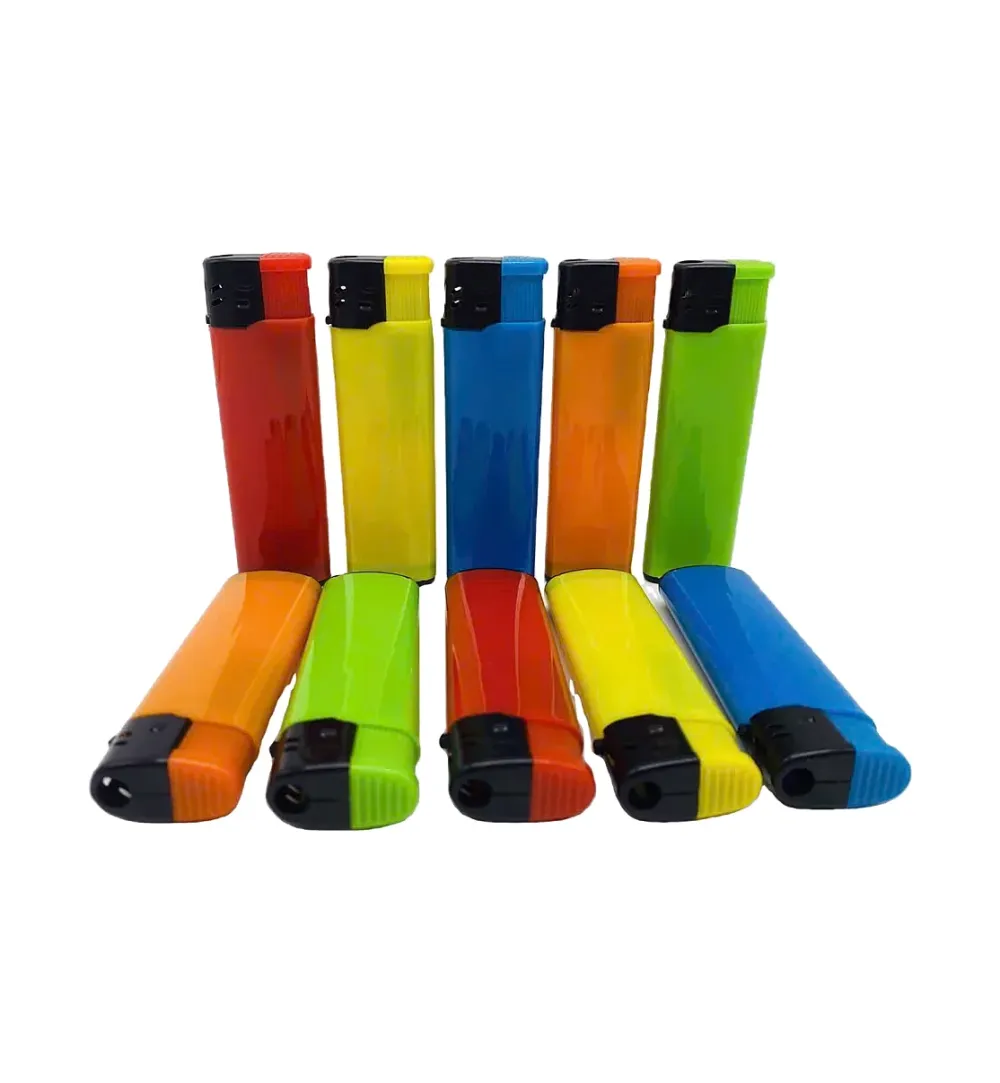
Child-resistant lighters have an extra part or action that requires hand strength and coordination that young children usually do not yet have. Depending on the model, manufacturers use one of the following, or a combination:
A firmer press: the ignition button or wheel is stiffer and has to be pressed firmly and decisively.
A lock button or lever: the lock must be pushed to the unlocked position before the lighter can be lit.
A two-step action: for example, holding a catch while pressing the button.
Automatic relocking: when you let go, the mechanism returns to the locked position.
Children playing with lighters is a cause of fires and burns that many places warn about, so some markets have specific requirements for child-resistant mechanisms, usually aimed at disposable lighters; some also restrict lighters that look like toys. The scope, test methods and supporting documents differ from country to country; businesses need to check the current regulations where they sell.
With disposable lighters, ask the supplier clearly which models have a child-resistant mechanism.
How to use child-resistant lighters correctly
Read the instructions and practise unlocking and lighting it a few times, holding it away from your face and from flammable materials.
After use, release your finger so the flame goes out; check that the lock has returned to the locked position, and on manually locked models slide it back straight away.
Do not remove, break or wedge anything into the lock to disable it and make the lighter easier to press; doing so completely defeats the child-resistant function.
If the lock jams, the spring is weak or the button is loose: stop using it and replace the lighter.
Child-resistant does not mean children cannot light it
This mechanism only makes the lighter harder to operate for most young children; it does not guarantee that no child can light it. Older or dexterous children, or those who often watch adults use one, may still be able to unlock it. So keep lighters out of children’s reach and sight — for other habits, see gas safety for families with young children.
Choosing and storing lighters in a home with children
Prefer models whose packaging clearly states that they have a child-resistant mechanism, with the manufacturer’s name, instructions and warnings.
A sturdy body without cracks; avoid lighters shaped like toys or cartoon characters.
Keep only as many lighters as you need, in a high or lockable drawer; do not leave them on the table or in an open handbag.
What should shops and importers check?
Whether the market they sell in requires a child-resistant mechanism, and which types of lighter it applies to.
Whether the supplier has appropriate documents, test results or certification; request copies for each model.
Packaging and labels in the right language, with the “keep out of the reach of children” warning as required where the goods are sold.
Test real samples: does the lock return by itself, and does it jam easily?
State clearly in the order which models have a lock, before ordering large quantities.
Are child-resistant lighters hard for older people to use?
They can be, because some models need a firm press or a two-step action; try one before buying.
Can I fit a lock to an ordinary lighter myself?
It is not advisable. The child-resistant mechanism is designed together with the body and the igniter; home-made modifications can easily damage the lighter or cause gas leaks.
Are there refillable lighters with a lock?
Yes, depending on the model. When refilling, follow the manufacturer’s instructions and the article how to refill a gas lighter.
VietnhatGas supplies gas lighters to dealers, shops and businesses; see our gas lighters category. If your market requires a child-resistant mechanism, state this clearly when you send a request on our quotation page.
Written by the VietnhatGas technical and sales team — a batch manufacturer of LPG cylinders. This content is for reference; regulations and standards may change, so please check the current texts.
Flint lighters strike a spark with a wheel and flint, electronic lighters use a piezo igniter. A comparison of how they work, reliability in damp and cold, wearing parts, ease of use and how shops choose what to stock.
A torch lighter gives a focused flame that the wind rarely blows out. Its uses in the kitchen, for lighting charcoal and when camping; what not to do, the safety lock, refilling and storage.
How to refill a gas lighter correctly: telling whether a lighter is refillable, choosing the right gas and nozzle, the safe refilling steps, what to do if it will not light and the mistakes to avoid.
Read article →
Need a volume quote?
Send us the capacity, quantity and brand printing requirements — VietnhatGas will reply with a batch quotation.