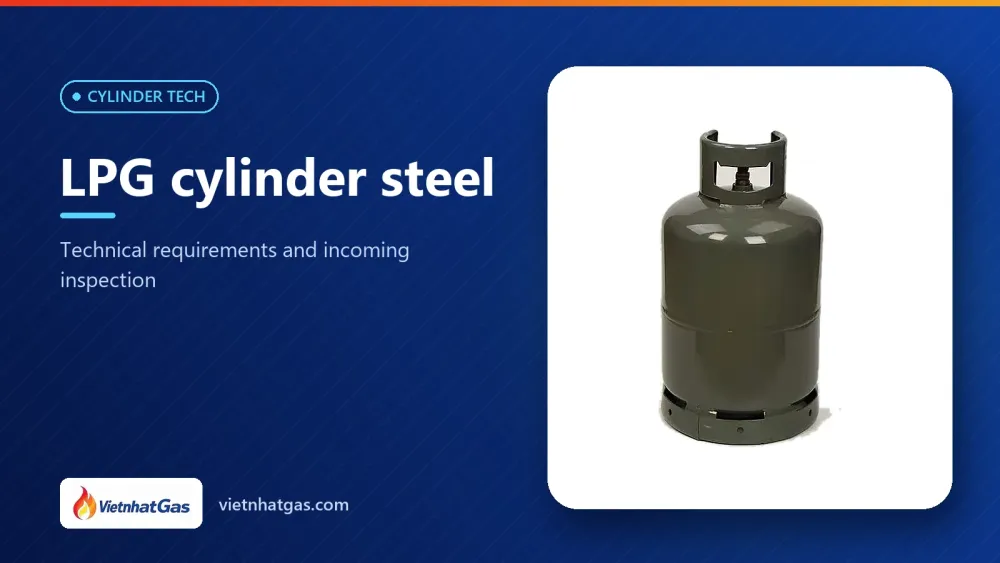
LPG cylinder steel: technical requirements and incoming inspection
LPG cylinder steel must withstand pressure, weld well, be ductile enough for deep drawing and tough against impacts. Learn how to check CO/CQ, thickness, mechanical properties, chemical composition and the risks of poor steel.
VietnhatGas · · Updated · 3 min read
A gas cylinder has to withstand the pressure of LPG over many years in circulation, through countless rounds of filling, transport and knocks. Cylinder quality therefore starts with the material: LPG cylinder steel determines the strength, weldability, formability and service life of the cylinder. This article explains the requirements for the steel and how the manufacturer controls incoming material.
Why is steel the foundation?
A gas cylinder is a pressure vessel. Even with a correct design and good welding, if the steel does not meet requirements the cylinder may deform, crack or fail the pressure test. Steel is also one of the factors with the greatest effect on LPG cylinder price.
Technical requirements for LPG cylinder steel
Strength under pressure: tensile strength and yield strength high enough that the cylinder body does not suffer permanent deformation under working pressure and test pressure.
Ductility for deep drawing: the cylinder heads are drawn from flat sheet, so the steel must be ductile enough not to tear or crack in the drawn area.
Impact toughness: cylinders are frequently knocked during loading and unloading, and tough steel helps limit cracking and fracture.
Clean surface, uniform thickness: few surface defects and a consistent thickness across the whole sheet.
For this reason, the manufacturer uses hot-rolled steel plate made specifically for pressure vessels, in a steel grade that meets the applicable standard, rather than ordinary steel plate. Grades commonly used worldwide for welded LPG cylinders include SG295 (JIS G3116), HP295 (GB 6653) and P265NB (EN 10120); the exact grade follows the applicable standard and the certificate of each batch.
How is the wall thickness determined?
The steel thickness is not chosen arbitrarily but calculated from the design: capacity, cylinder diameter, design pressure and the mechanical properties of the chosen steel. Larger cylinders usually need thicker steel. For VietnhatGas 12kg LPG cylinders, the steel used for the cylinder is around 2.0 – 3.0 mm thick. Cutting thickness to lower the cost is a major risk and is unacceptable in pressure vessel manufacturing.
How is incoming steel inspected?
CO/CQ documents: the steel supplier’s certificate of origin and certificate of quality for each batch, stating the steel grade, batch number, mechanical properties and chemical composition.
Thickness measurement: checks at many points on the coil or sheet, compared against the permitted tolerance.
Mechanical testing: tensile test samples are taken to determine tensile strength, yield strength and elongation, compared with the requirements of the standard.
Chemical composition check: with attention to elements that affect weldability and ductility.
Surface inspection: to detect pitting, laminations, deep rust and rolling marks.
Steel batches that fail must be rejected before they reach the production line.
The risks of using poor-quality steel
Cracking and tearing when drawing the heads; a high reject rate.
Brittle welds that crack easily and struggle to pass non-destructive testing.
Rapid rusting and a short service life, with cylinders rejected early at periodic inspection.
Safety risks for users, damaging the reputation of the dealer and the gas brand.
The standards VietnhatGas applies
VietnhatGas manufactures LPG cylinders to TCVN 6292:2013, with reference to ISO 22991. Incoming steel comes with full CO/CQ documents and is inspected before production; finished cylinders are pressure tested and leak tested, and delivered with documentation for each batch. Learn about the process on our LPG cylinder manufacturing service page.
Frequently asked questions
Is a thicker gas cylinder always better?
Not necessarily. The thickness must match the design and the standard: too thin is unsafe, while thicker than necessary makes the cylinder heavy and wastes steel. What matters is the right type of steel and a uniform thickness.
Can dealers ask to see the steel certificates?
Yes. Dealers and gas brands can ask the manufacturer for the CO/CQ of the steel batch together with the inspection records for the cylinder batch. See also how to tell a compliant LPG cylinder.
How do steel gas cylinders differ from composite gas cylinders?
Steel cylinders are durable, widely used and reasonably priced; composite cylinders are lighter but usually cost more. A detailed comparison is in steel vs composite gas cylinders.
Need LPG cylinders made from steel with clear CO/CQ documents, manufactured to TCVN 6292:2013? Send a request on our quotation page.
Written by the VietnhatGas technical and sales team — a batch manufacturer of LPG cylinders. This content is for reference; regulations and standards may change, so please check the current texts.
The process for ordering LPG cylinders in batches from the manufacturer: request, technical consultation, quotation, sample approval, contract, production, quality control, packing, delivery and after-sales.
LPG cylinder welding covers the longitudinal body seam, circumferential seams and the neck weld. Learn about automatic welding, common weld defects and inspection by ultrasonic testing, X-ray and pressure testing.
LPG cylinder prices differ between manufacturers because of capacity, steel, valve, painting and brand printing, batch size, inspection documents and transport. How to compare quotes properly.
Read article →
Need a volume quote?
Send us the capacity, quantity and brand printing requirements — VietnhatGas will reply with a batch quotation.