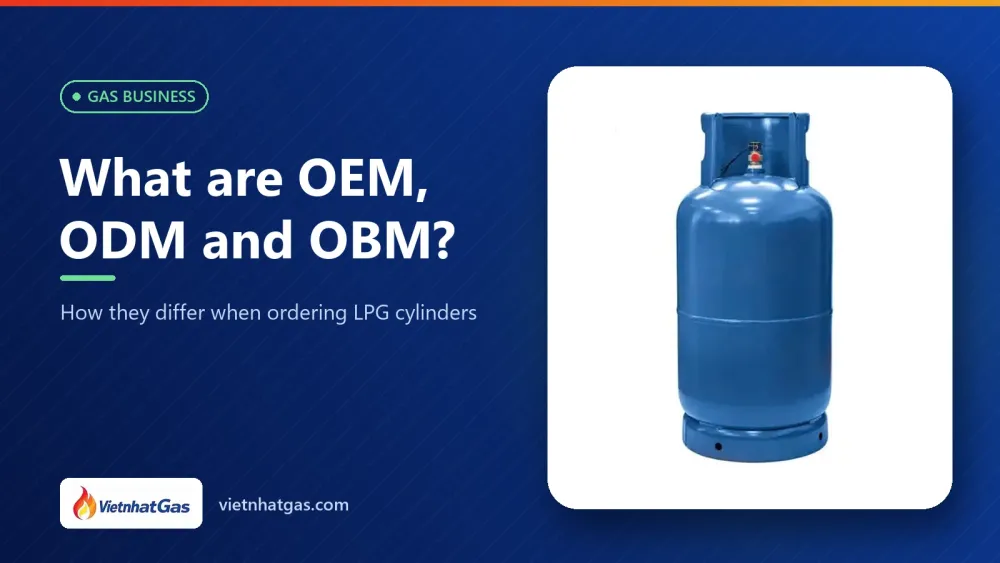
What are OEM, ODM and OBM? How they differ when ordering LPG cylinders
What OEM, ODM and OBM mean, how they differ, their pros and cons and who each suits; examples from ordering LPG cylinder production and what to prepare before cooperating.
VietnhatGas · · 3 min read
When looking for an LPG cylinder manufacturer to build their own brand, dealers and businesses often come across three terms: OEM, ODM and OBM. So what are OEM, ODM and OBM, how do they differ and which model suits you? This article explains each concept with examples from the LPG cylinder sector.
OEM (Original Equipment Manufacturer) is a model in which the manufacturer makes products to the design and specifications provided by the customer, and the products are sold under the customer’s brand. The manufacturer takes care of machinery, materials, processes and quality control.
Example: a gas brand has its own cylinder drawings (handle style, foot ring, paint colour, logo stamping position, valve type) and has a factory produce cylinders exactly to those drawings. For LPG cylinders, the customer’s design must still meet the applicable standard; the manufacturer reviews it and proposes adjustments where needed.
What is ODM?
ODM (Original Design Manufacturer) is a model in which the manufacturer uses its own existing designs; the customer chooses a model, customises some details and then sells the product under the customer’s brand.
Example: a dealer chooses a 12kg or 45kg cylinder model that the factory already produces consistently, then chooses the paint colour, logo printing, brand name stamping and valve type.
What is OBM?
OBM (Original Brand Manufacturer) is when the manufacturer designs, produces and sells products under its own brand. With VietnhatGas, OBM cooperation means the partner distributes VietnhatGas-branded products — see VietnhatGas distribution franchise.
OEM, ODM and OBM at a glance
Criterion
OEM
ODM
OBM
Who designs
Customer
Manufacturer
Manufacturer
Brand on the product
Customer’s
Customer’s
Manufacturer’s
Preparation time
Longest
Shorter
Shortest
Best for
Brands with their own standards
Dealers wanting a brand quickly
Partners wanting to start trading straight away
Pros, cons and who each model suits
The OEM model
The advantage is a product with its own distinctive identity. The drawback is that it requires technical capability, and sample approval takes more cost and time. It suits large gas brands or export orders with specific technical requirements.
The ODM model
The advantage is speed and low cost, based on proven designs. The drawback is little difference in shape. It suits dealers and filling plants that want to build their own brand through paint colour and logo — see private-label customisation.
The OBM model
The advantage is a ready-made brand, products and sales materials. The drawback is that you do not own the brand and must follow the manufacturer’s policies. It suits partners new to the industry or those wanting to expand their range quickly.
What should you prepare before cooperating?
Company legal documents; for OEM and ODM, register trademark protection before the brand is printed on cylinders.
Logo files, paint colour codes and the content to be stamped on the cylinder.
Capacity, estimated quantity, valve type and delivery location.
For OEM only: drawings, technical specifications and the applicable standard.
The OEM and ODM distinction is also useful when a business orders smaller items such as promotional gifts; our guide to ordering logo-printed lighters as corporate gifts covers choosing a model, designing the logo and planning the order timeline.
Frequently asked questions
How do OEM and ODM differ?
They differ in who owns the design: OEM produces to the customer’s design, while ODM uses the manufacturer’s existing design. Both carry the customer’s brand.
Who is responsible for inspection when ordering LPG cylinders under OEM?
The manufacturer is responsible for producing cylinders that meet the applicable standard and delivering them with inspection records for each batch. Periodic inspection while cylinders are in circulation is usually arranged by the cylinder owner under current regulations.
Can a small order carry its own brand?
It depends on the model and specifications; send a request for specific advice.
Now you know what OEM, ODM and OBM are, but still not sure which model suits you? Send the capacity, quantity and your branding wishes on our quotation page, and VietnhatGas will advise on options for 12kg and 45kg cylinders and other capacities.
Written by the VietnhatGas technical and sales team — a batch manufacturer of LPG cylinders. This content is for reference; regulations and standards may change, so please check the current texts.
The process for ordering LPG cylinders in batches from the manufacturer: request, technical consultation, quotation, sample approval, contract, production, quality control, packing, delivery and after-sales.
What businesses importing or contract-manufacturing LPG cylinders from Vietnam need to prepare: destination-market standards, certification, labelling, valve type, export documents, packaging and shipping.
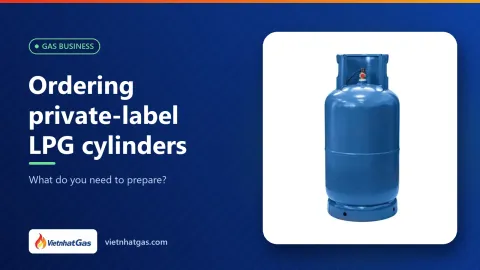
The steps to order private-label LPG cylinders: choose OEM, ODM or OBM, prepare your brand identity, approve samples, confirm quantities and schedule batch deliveries.
Read article →
Need a volume quote?
Send us the capacity, quantity and brand printing requirements — VietnhatGas will reply with a batch quotation.